
Ericydeus
Pascoe, 1880
broad-nosed weevils
Species Guides
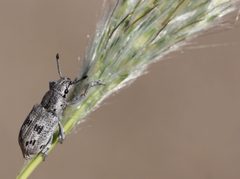
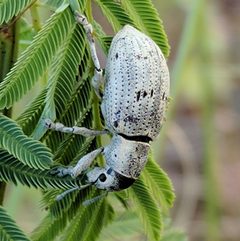
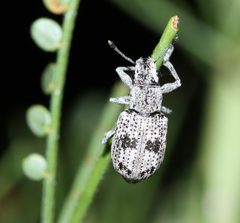
2Ericydeus is a of broad-nosed weevils (Curculionidae: Entiminae: Naupactini) containing 16 described distributed from the United States through Central America to Argentina. The genus was revised in 1995, revealing distinct biogeographic patterns: South American species form one clade and Central/North American species form another, with character evolution following a southern-to-northern direction. Species exhibit varied coloration including metallic green, coppery, and punctate patterns.
Pronunciation
How to pronounce Ericydeus: /ˌɛrɪˈsɪdjəs/
These audio files are automatically generated. While they are not always 100% accurate, they are a good starting point.
Identification
Members of Ericydeus are recognized as broad-nosed weevils (Entiminae) with the characteristic short, broad rostrum typical of the . The 1995 revision provides a dichotomous key distinguishing the 16 based on habitus, punctation patterns, and male genitalia. Specific diagnostic features include variations in elytral coloration (metallic green, coppery, or with punctate patterns), body shape, and the structure of the . Species such as E. sedecimpunctatus and E. duodecimpunctatus are distinguished by their characteristic spot patterns.
Images
Distribution
Distributed throughout the Americas from the United States to Argentina. South American records include Argentina, Brazil (Bahia), Colombia, and Peru. Central American records include Mexico (Yucatán). The shows a clear biogeographic split: six occur in South America (E. argentinensis, E. sedecimpunctatus, E. nigropunctatus, E. schoenherri, E. hancocki, E. bahiensis) and ten species in Central and North America.
Similar Taxa
- other Naupactini generaEricydeus is distinguished from related Naupactini by the combination of broad-nosed weevil and the specific character states detailed in the 1995 revision, including male genitalic structure and elytral punctation patterns.