
Myllocerus undecimpustulatus
Faust, 1891
Sri Lanka weevil, yellow-headed ravenous weevil
Species Guides
1- Myllocerus undecimpustulatus undatus(Sri Lankan weevil)
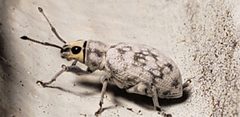
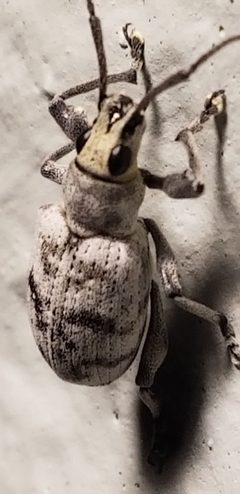
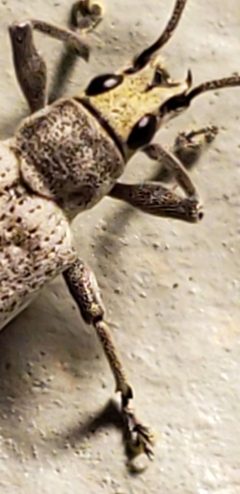
Myllocerus undecimpustulatus is an oriental broad-nosed weevil (Curculionidae: Entiminae) native to Sri Lanka and the Indian subcontinent. It is a pest with a wide range that has established in Florida, USA, since at least 2000. The exhibits distinctive sexual including female abdominal rocking as a mate-strength test and prolonged copulatory guarding by males. It shows seasonal variation in cold and feeding activity, with winter-collected consuming more leaf material after cold exposure than summer-collected individuals.
Pronunciation
How to pronounce Myllocerus undecimpustulatus: /mɪloʊˈsɛrəs ʌndɛˌsɪmpjuːˈstjuleɪtəs/
These audio files are automatically generated. While they are not always 100% accurate, they are a good starting point.
Images
Habitat
In its Florida range, associated with well-drained sandy soils of peninsular Florida; western Gulf Coast areas predicted unsuitable due to aquic or udic soils and higher rainfall. Native range details not specified in sources.
Distribution
Native to Sri Lanka; spread to India and Pakistan. in United States: first detected 2000 in Pompano Beach, Broward County, Florida. Predicted potential spread to southeastern and western United States with northern limit approximately 33° North isothermal line; western Gulf Coast predicted unsuitable.
Seasonality
activity shows seasonal physiological variation: winter-collected weevils exhibit greater leaf consumption after cold exposure and different cold patterns than summer-collected weevils.
Diet
; feeds on leaves. plants include Ficus (fig), Indian bay leaf (reported as new host record), Citrus, and peach foliage in field studies. Over 20 crops reported as hosts for regional in India and Pakistan region.
Host Associations
- Ficus - fig trees
- Cinnamomum tamala - Indian bay leaf; first reported record
- Citrus - first US detection on Citrus sp.
- Prunus persica - peach foliage used in field cage studies
Behavior
Females are typically larger than males and exhibit vigorous to-and-fro abdominal rocking when approached by males, functioning as a mate-strength test that dislodges weaker males while persistent males maintain grip. Male-male competition occurs with non-mounting males attempting to displace mounted rivals. Copulation lasts several hours; effective sperm transfer completed approximately 2.5 hours after copulation onset, followed by extended copulatory guarding. Forced separation during late guarding stages frequently results in male injury or death.
Ecological Role
plant pest in invaded range; damages crops and shows resistance to controls.
Human Relevance
Significant agricultural pest in Florida with potential for further spread in North America. Susceptible to certain : BotaniGard ( bassiana) and Entrust (spinosad) showed highest mortality in laboratory trials.
Sources and further reading
- BugGuide
- Wikipedia
- GBIF taxonomy match
- iNaturalist taxon
- NCBI Taxonomy
- Catalogue of Life
- Sri Lankan weevil Myllocerus undecimpustulatus undatus Marshall
- Adult cold tolerance and potential North American distribution of Myllocerus undecimpustulatus undatus (Coleoptera: Curculionidae)
- Biology, Chemical Ecology, and Sexual Dimorphism of the Weevil Myllocerus undecimpustulatus undatus (Coleoptera: Curculionidae)
- Survival Time, Mortality Rate, and Feeding Damage of Adult Myllocerus undecimpustulatus undatus (Coleoptera: Curculionidae) Exposed to Biopesticides in Laboratory Bioassays
- Biology, chemical ecology, and sexual dimorphism of the Sri Lankan weevil,Myllocerusundecimpustulatus undatusMarshall (Coleoptera: Curculionidae)
- Rocking Female Chooses Clingy Male: on Mating Behaviour of <i>Myllocerus undecimpustulatus undatus</i> (<i>Coleoptera: curculionidae</i>)
- Mortality rates and feeding behavior of adult Myllocerus undecimpustulatus undatus Marshall (Coleoptera: Curculionidae) exposed to four biopesticides on peach foliage in field cages