
Myllocerus
Schönherr, 1823
oriental broad-nosed weevils, ash weevils, grey weevils, Sri Lankan weevils
Species Guides
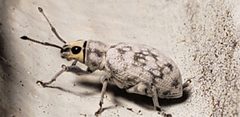
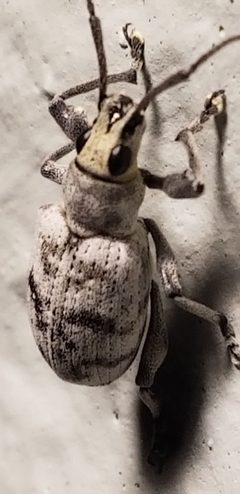
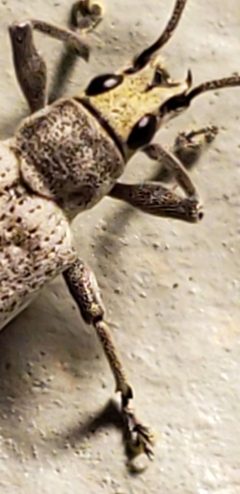
1- Myllocerus undecimpustulatus(Sri Lanka weevil)
Myllocerus is a large of oriental broad-nosed weevils in the Curculionidae, comprising at least 330 described . Species within this genus are predominantly distributed across the Indian subcontinent and surrounding regions, with several species recognized as significant agricultural pests. Notable pest species include Myllocerus undecimpustulatus undatus (Sri Lankan weevil), M. maculosus (cotton grey weevil), and M. viridanus (ash weevil), which attack diverse crop plants including cereals, legumes, vegetables, and fruit trees. The genus exhibits typical weevil with broad rostrums and root-feeding larval stages combined with foliage-feeding .
Pronunciation
How to pronounce Myllocerus: /mɪlˈloʊsərəs/
These audio files are automatically generated. While they are not always 100% accurate, they are a good starting point.
Identification
Myllocerus are characterized as broad-nosed weevils with relatively short, broad rostra compared to other curculionid groups. typically exhibit greyish or ash-colored , often with variable patterning of spots or markings. is present in several species, with females generally larger than males. Species-level identification requires examination of genitalia and detailed morphological features; M. undecimpustulatus undatus can be distinguished from related by specific elytral punctation patterns and body proportions.
Images
Habitat
occupy agricultural landscapes, orchards, and forested areas where plants are available. Larval stages develop in soil, requiring well-drained sandy or loamy substrates for . are found on host plant foliage, particularly on young, tender growth. M. undecimpustulatus undatus in Florida is associated with well-drained sandy soils of peninsular regions, while western Gulf Coast areas with aquic or udic soils appear unsuitable.
Distribution
Native range centered on the Indian subcontinent: Sri Lanka, India, Pakistan, with extension into Southeast Asia. M. undecimpustulatus undatus introduced to United States, first detected in Pompano Beach, Broward County, Florida in 2000s, with potential for spread to southeastern and western United States following approximately 33° North isothermal limit. GBIF records indicate presence in Angola, Democratic Republic of Congo, and Cameroon, though these may represent data artifacts or distinct .
Seasonality
Multiple overlapping occur during favorable periods. M. maculosus exhibits three overlapping generations from July to October in Rajasthan, India. Winter survival occurs as soil-dwelling . M. undecimpustulatus undatus demonstrate reduced feeding and survival under sustained cold exposure, with winter-collected individuals showing greater cold and post-cold feeding activity than summer-collected specimens.
Life Cycle
Complete with soil-dwelling stages. M. maculosus: oviposition 1–5 days post-copulation, 98–350 per female, incubation 3–12 days, four larval instars requiring 23–40 days, pupal period 3–9 days in soil, total 29–58 days. are long-lived. occurs as . M. undecimpustulatus undatus: effective sperm transfer requires approximately 2.5 hours of copulation, followed by extended post-copulatory mate guarding lasting several hours total.
Behavior
are primarily or feeders on foliage, producing characteristic marginal and interveinal notching damage. Mating in M. undecimpustulatus undatus involves distinctive female abdominal rocking when approached by males, functioning as a mate-strength test that dislodges weaker suitors while persistent males maintain grip. Male-male competition includes attempts to displace mounted rivals. Successful copulation requires female cessation of rocking; forced separation during late guarding stages frequently results in male injury or death. Adults exhibit reduced leaf consumption under sustained cold exposure compared to repeated cold exposure regimes.
Ecological Role
Larvae function as root-feeding /herbivores in soil , while act as folivores on diverse plant . High densities cause significant plant damage: M. viridanus achieved 100% with 77.6% foliar damage on Moringa concanensis seedlings. M. maculosus causes maximum damage during July–August when plants are young. Soil-dwelling stages contribute to nutrient cycling through root consumption and .
Human Relevance
Major agricultural pest with multiple causing economic damage to crops. M. undecimpustulatus undatus attacks Citrus and over 20 crop species; M. maculosus is a serious pest of pearl millet (bajra) in Rajasthan and damages cotton, maize, pigeon pea, sugarcane, mango, apple, pomegranate, and okra; M. viridanus damages Moringa concanensis and other ; M. discolor damages teak seedlings. Management relies on including bassiana (BotaniGard), spinosad (Entrust), and neem oil, with synthetic as alternatives. Hybrid crop varieties often show greater susceptibility than local varieties.
Sources and further reading
- BugGuide
- Wikipedia
- GBIF taxonomy match
- iNaturalist taxon
- NCBI Taxonomy
- Catalogue of Life
- Sri Lankan weevil Myllocerus undecimpustulatus undatus Marshall
- Biology, Chemical Ecology, and Sexual Dimorphism of the Weevil Myllocerus undecimpustulatus undatus (Coleoptera: Curculionidae)
- Biology, chemical ecology, and sexual dimorphism of the Sri Lankan weevil,Myllocerusundecimpustulatus undatusMarshall (Coleoptera: Curculionidae)
- Rocking Female Chooses Clingy Male: on Mating Behaviour of <i>Myllocerus undecimpustulatus undatus</i> (<i>Coleoptera: curculionidae</i>)
- The Bionomics ofMyllocerus maculosusDesb. (Coleoptera, Curculionidae) onPennisetum typhoideum in Rajasthan, India
- New Record of Host Plants of Myllocerus viridanus Fabricius (Coleoptera: Curculionidae), a major polyphagous pest from Kerala, India
- Adult cold tolerance and potential North American distribution of Myllocerus undecimpustulatus undatus (Coleoptera: Curculionidae)
- Record of grey weevil, Myllocerus discolor (nr.) Boheman (Coleoptera: Curculionidae) grub infesting roots of Teak (Tectona grandis L.F.) seedlings in Maharashtra
- Ecofreindly Management of Ash Weevil, Myllocerus viridanus Fabr. (Coleoptera: Curculionidae) in Moringa concanensis Nimmo Seedlings Raised from Diverse Seed Sources
- Sexual Behaviour and Sex Determination of Cotton Grey Weevil, Myllocerus Maculosus Desh. (Coleoptera: Curculionidae)
- Mortality rates and feeding behavior of adult Myllocerus undecimpustulatus undatus Marshall (Coleoptera: Curculionidae) exposed to four biopesticides on peach foliage in field cages
- Survival Time, Mortality Rate, and Feeding Damage of Adult Myllocerus undecimpustulatus undatus (Coleoptera: Curculionidae) Exposed to Biopesticides in Laboratory Bioassays