
Cyrtepistomus
Marshall, 1913
oriental broad-nosed weevils
Species Guides
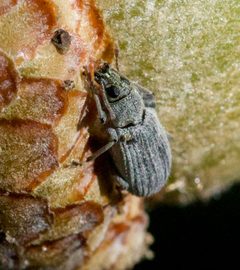
1- Cyrtepistomus castaneus(Asiatic oak weevil)
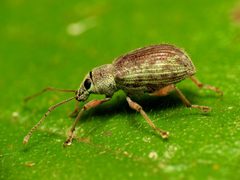
Cyrtepistomus is a of oriental broad-nosed weevils in the Curculionidae, containing at least 20 described . The genus is native to Asia, with some species introduced to North America. One well-documented species, Cyrtepistomus castaneus, is known as the Asiatic oak weevil and has established feeding on oak trees in North American forests.
Pronunciation
How to pronounce Cyrtepistomus: //sɜːrˌtɛpɪˈstoʊməs//
These audio files are automatically generated. While they are not always 100% accurate, they are a good starting point.
Identification
Members of this are recognized as broad-nosed weevils (Entiminae), characterized by a broad, short rostrum (snout) compared to the elongated snout typical of many other weevil . The genus is distinguished within the tribe Cyphicerini by specific morphological features of the rostrum and , though precise diagnostic characters require examination.
Images
Habitat
Native Asian occur in forested . In North America, introduced have been documented in oak forests where Quercus species serve as trees.
Distribution
Native to Asia (China, India, Japan based on distribution records). At least one , Cyrtepistomus castaneus, has been introduced to North America where it is established as an species.
Diet
Cyrtepistomus castaneus feeds on oak foliage. Diet of other in the is not documented in available sources.
Host Associations
- Quercus - Specifically documented for C. castaneus in North America; associations for other are not established in available sources.
Ecological Role
C. castaneus functions as a folivore in introduced North American oak forests. The ecological role of most in their native Asian range is not documented.
Human Relevance
C. castaneus is recognized as a potential pest of oak trees in North America due to its feeding on foliage. Other in the have no documented human relevance.
Similar Taxa
- Other Entiminae generaBroad-nosed weevils share the characteristic short, broad rostrum; Cyrtepistomus is distinguished by tribal placement in Cyphicerini and specific rostral .
- Native North American oak-feeding weevilsC. castaneus may be confused with native weevils in oak ; its status and association with Asian origin help distinguish it in regions where it has been introduced.
More Details
Taxonomic history
The was established by Marshall in 1913 and contains at least 20 described according to current estimates, with some sources listing up to 27 species.
Research limitations
Most available information pertains to C. castaneus due to its economic relevance as an introduced . The majority of species in this lack published biological studies.