
Ochyromera ligustri
Warner, 1961
ligustrum weevil, Ligustrum Seed Weevil
Ochyromera ligustri is a small seed-feeding weevil (3.0–4.7 mm) in the Curculionidae. Native to the Palearctic region, it was first detected in North America in North Carolina in 1959 and has since spread across the southeastern United States. The specializes on Ligustrum species (privets), with feeding on foliage and fruits while larvae develop internally within seeds. Its narrow specificity and seed-feeding habit have led to consideration as a fortuitous agent against privets.
Pronunciation
How to pronounce Ochyromera ligustri: /ˌoʊkɪˈroʊmərə lɪˈɡʊstri/
These audio files are automatically generated. While they are not always 100% accurate, they are a good starting point.
Identification
Distinguished from other Ochyromera and small curculionid seed weevils by its confirmed association with Ligustrum fruits and seeds. Accurate identification to species level may require examination of genitalia or molecular methods; primers have been developed to detect its presence in fruits without rearing. Detection in the field targets fallen fruits with feeding marks, oviposition scars, or signs of internal larval feeding.
Images
Appearance
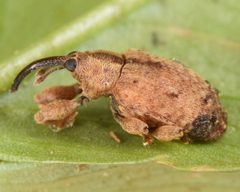
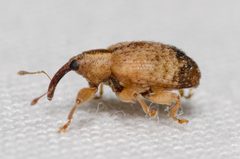
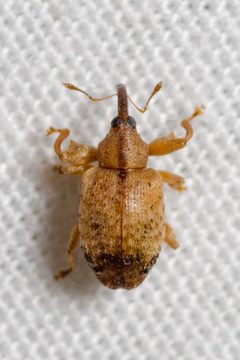
Small weevil measuring 3.0–4.7 mm in body length. Typical curculionid with an elongated rostrum (snout). Coloration and detailed external morphology not extensively described in available sources.
Habitat
Forests, floodplains, and gardens where Ligustrum (privets) occur. Collected from hiking trails, university grounds, and private properties. suitability is directly tied to presence of plants rather than specific abiotic conditions.
Distribution
Southeastern United States including Louisiana, Mississippi, Alabama, Georgia, and Texas; also recorded from New Jersey, North Dakota, and South Dakota. First detected in Wake County, North Carolina in 1959. Presumed native to the oriental or far east Palearctic region.
Seasonality
emerge from fallen fruits in May following as larvae. Larval development occurs during fall and winter, with maturity reached by April. Adult activity and oviposition presumably occur during summer months when fruits are available.
Diet
feed on foliage and fruits of Ligustrum . Larvae feed internally on seeds and fruit flesh. Complete larval development has been experimentally confirmed only on Ligustrum japonicum; to L. sinense is presumed but not experimentally verified. Historical literature also records associations with L. lucidum, L. amurense, Syringa species, and Vitis species, though the strength of these relationships varies.
Host Associations
- Ligustrum japonicum - primary Complete development confirmed experimentally
- Ligustrum sinense - presumed presumed but not experimentally confirmed
- Ligustrum lucidum - historical recordAssociation from literature, strength unclear
- Ligustrum amurense - historical recordAssociation from literature, strength unclear
- Syringa spp. - historical recordAssociation from literature, may represent incidental feeding
- Vitis spp. - historical recordAssociation from literature, may represent incidental feeding
Life Cycle
Females oviposit single into fruit seeds or flesh. Larvae feed internally on fruit and seeds throughout fall and winter, maturing by April. Larvae overwinter within fruits. emerge from fallen fruits in May. Development is with one per year.
Behavior
feed externally on plant foliage and fruits. Larvae are endophytic seed-feeders, completing development within fruits. Females deposit single per oviposition event, targeting seeds or fruit flesh. Detection efforts focus on fallen fruits showing feeding damage, oviposition marks, or other signs of .
Ecological Role
Seed of Ligustrum . Considered a potential fortuitous agent against privets, which negatively impact native plant diversity and forest in North America. Seed-feeding may reduce reproductive output of plants, though quantitative impact on is not well documented.
Human Relevance
Subject of research interest as a potential agent for Ligustrum . -based detection methods have been developed to facilitate monitoring and study. No significant direct economic impact on agriculture or forestry documented; primarily of ecological management interest.
Similar Taxa
- Other Ochyromera speciesMorphologically similar small seed-feeding weevils; require detailed examination or molecular methods for differentiation
- Other Curculionidae associated with LigustrumShare and plant associations; O. ligustri distinguished by specific size range, confirmed larval development in seeds, and molecular markers
More Details
Detection Methods
Newly developed primers enable rapid detection of O. ligustri in fruits without time-consuming rearing, facilitating ecological and research.
Biological Control Status
Classified as a 'fortuitous' agent—meaning it arrived unintentionally and was not deliberately introduced—rather than a classical biocontrol introduction. Its efficacy in suppressing privet remains under study.