
Ochyromera
Pascoe, 1874
leguminous seed weevils
Species Guides
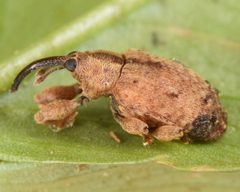
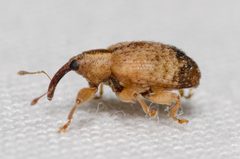
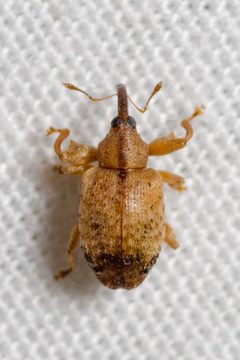
1- Ochyromera ligustri(ligustrum weevil)
Ochyromera is a of weevils (Curculionidae) comprising more than 30 described . The genus is distributed in the Oriental and Far East Palaearctic regions, particularly in mountain areas of warm to subtropical Southeast Asia. Some species have been introduced to other regions, including North America. Members are associated with leguminous and other plant , with larvae typically developing inside seeds or fruits.
Pronunciation
How to pronounce Ochyromera: /ˌɒkʰɪˈrɒmɛrə/
These audio files are automatically generated. While they are not always 100% accurate, they are a good starting point.
Images
Habitat
Mountain areas of warm to subtropical Southeast Asia; forests, floodplains, and agricultural areas where plants occur. Specific occupy jackfruit orchards (O. artocarpi) or Ligustrum-dominated (O. ligustri in introduced North American range).
Distribution
Oriental and Far East Palaearctic regions, including Southeast Asia. O. artocarpi reported from India (Karnataka, Kerala, Tamil Nadu, Assam, Tripura, Bihar, Uttar Pradesh, Himalayan foothills). O. ligustri introduced to southeastern United States, New Jersey, North and South Dakota.
Seasonality
O. artocarpi: peak December–April, maximum in March. O. ligustri: emerge from fruit in May, larvae mature by April.
Diet
Variable by . O. artocarpi feed on jackfruit leaves; larvae feed on young jackfruit tissues including pericarp and endocarp, and tender flower buds. O. ligustri adults feed on foliage and fruits; larvae feed on seeds and fruit flesh of Ligustrum spp.
Host Associations
- Artocarpus heterophyllus - primary jackfruit; O. artocarpi
- Ligustrum amurense - O. ligustri; literature record
- Ligustrum japonicum - primary O. ligustri; complete development confirmed
- Ligustrum lucidum - O. ligustri; literature record
- Ligustrum sinense - presumed O. ligustri; presumed adapted
- Syringa spp. - literature recordO. ligustri
- Vitis spp. - literature recordO. ligustri
Life Cycle
O. artocarpi: (3.9 days) → five larval instars (11.8 days) → (3.1 days) → pupa (7.3 days) → ; total development 25–26 days; inside young jackfruit; adults emerge through circular holes in dried fallen fruits. O. ligustri: adult females oviposit single egg in fruit seeds or flesh; larvae feed during fall and winter; mature by April; adults emerge from ground-level fruit in May.
Behavior
O. artocarpi are sluggish before feeding, occasionally fly horizontally, and feed singly or in groups externally on fruit. O. ligustri shows narrow specificity with visible feeding and oviposition marks on fruits.
Ecological Role
Some are major agricultural pests (O. artocarpi on jackfruit). O. ligustri is considered a potential fortuitous agent for privets in North America due to its narrow range and seed-feeding habit.
Human Relevance
O. artocarpi is a major pest of jackfruit in India, causing economic damage through fruit boring and premature fruit drop. O. ligustri may provide benefits against Ligustrum in the United States.
Similar Taxa
- Other Curculionidae seed weevilsSimilar larval habits of seed and fruit boring; distinguished by specificity and geographic distribution for Ochyromera
More Details
Taxonomic history
established by Pascoe in 1874. The genus has been associated with leguminous historically, though modern records include diverse hosts such as jackfruit (Moraceae) and privet (Oleaceae).
Environmental correlations
O. artocarpi positively correlates with evaporation and negatively correlates with precipitation.
Sources and further reading
- BugGuide
- Wikipedia
- GBIF taxonomy match
- iNaturalist taxon
- NCBI Taxonomy
- Catalogue of Life
- Biology and Incidence of the Jackfruit Bud Weevil Ochyromera artocarpi Marshall (Coleoptera: Curculionidae)
- Detection of Ochyromera ligustri (Coleoptera: Curculionidae: Curculioninae) in Ligustrum spp. (Oleaceae) Using Newly Developed PCR Primers.