
Tachygonus
C.J. Schoenherr, 1833
flea weevils
Species Guides
4- Tachygonus centralis(flea weevil)
- Tachygonus fulvipes
- Tachygonus lecontei(flea weevil)
- Tachygonus tardipes(Texas Bow-legged Weevil)
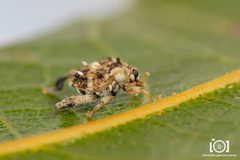
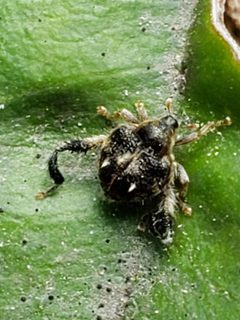
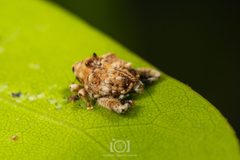
Tachygonus is a of flea weevils (Curculionidae) comprising over 80 described . Larvae are leaf miners that feed internally within leaf tissue, creating distinctive mines. At least one species, T. erythroxyli, produces expanded mines with three bubble-like chambers, each corresponding to a larval instar. The genus shows variable associations, with some species exhibiting strict host specificity.
Pronunciation
How to pronounce Tachygonus: //ˌtækiˈɡoʊnəs//
These audio files are automatically generated. While they are not always 100% accurate, they are a good starting point.
Identification
Members of Tachygonus can be distinguished from similar leaf-mining weevils by their flea weevil combined with larval leaf-mining habits. The distinctive three-bubble mine pattern has been documented in T. erythroxyli, though it is unknown if this trait is -wide. likely show typical Curculionidae features including an elongated rostrum.
Images
Habitat
Terrestrial vegetation where plants occur. T. erythroxyli has been documented in restinga biome vegetation with sandy soils and dense clump formations. Eastern USA are associated with forest and vegetation communities.
Distribution
occurs in the Americas; documented from Brazil (Rio de Janeiro state) and eastern USA. plant distributions may constrain local ranges.
Seasonality
Mines of T. erythroxyli occur year-round with markedly higher abundance in summer. Seasonality of other has not been documented.
Diet
Larvae feed internally on leaf tissue of plants. likely feed on plant material, though specific adult diet has not been documented.
Host Associations
- Erythroxylum subsessile - obligate larval T. erythroxyli shows local monophagy on this in Rio de Janeiro state
- Various host plants - larval Eastern USA show broader associations; specific hosts vary by species
Life Cycle
Females lay singly on upper leaf surfaces. Larvae develop through three instars, feeding internally and creating leaf mines. In T. erythroxyli, each instar produces a distinct bubble in an expanded mine. occurs within the mine, with emerging from leaf tissue.
Behavior
Larvae are internal leaf miners, feeding between upper and lower leaf surfaces. T. erythroxyli shows local monophagy, with strict specificity to Erythroxylum subsessile at the study location. Mines are persistent and abundant when present.
Ecological Role
Herbivore that creates leaf mines, contributing to foliar damage in plant . Supports ; T. erythroxyli has a 53% rate by three parasitoid , with Cirrospilus sp. (Eulophidae) as the parasitoid.
Similar Taxa
- LaemosaccusBoth show modified femoral structures; Laemosaccus has front with teeth, while Tachygonus shows repetitive structural modifications on hind femora
- AnthonominiSimilar front femoral modifications with teeth; distinguished by leaf-mining larval habit in Tachygonus versus other feeding strategies
More Details
Parasitoid ecology
T. erythroxyli supports a substantial load, with 53% of individuals parasitized by three . Cirrospilus sp. (Eulophidae) dominates, representing 88% of parasitoids recovered.
Structural evolution
Tachygonus has been noted for exhibiting 'cool variants on a repetitive structure' in hind femoral , representing an evolutionary pattern of serial variation comparable to that seen in some Hymenoptera.
Sources and further reading
- BugGuide
- Wikipedia
- GBIF taxonomy match
- iNaturalist taxon
- NCBI Taxonomy
- Catalogue of Life
- A wiley wasp | Beetles In The Bush
- A remarkable leaf mine induced by Tachygonus sp.n. (Coleoptera: Curculionidae: Curculioninae: Rhamphini) on Erythroxylum subsessile (Erythroxylaceae) with a description of the new species
- New Larval Host Records for Three Species of Leaf-Mining Weevils in the Eastern USA (Coleoptera: Curculionidae: Curculioninae), with a Review of Hosts and Larval Habits for the Genus Tachygonus Schönherr