
Isochnus
Thomson, C.G., 1859
Species Guides
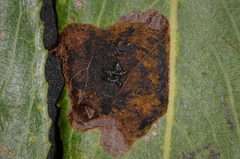
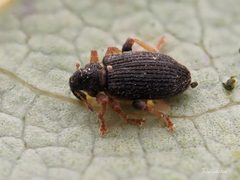
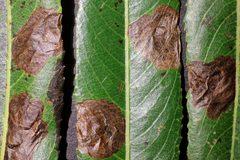
3Isochnus is a of weevils in the Curculionidae, tribe Rhamphini. occur in Europe and North America. At least one species, Isochnus sequensi, is a on willows (Salix). The genus is sometimes referred to as '-weevils', suggesting jumping ability.
Pronunciation
How to pronounce Isochnus: //ˈaɪsoʊknəs//
These audio files are automatically generated. While they are not always 100% accurate, they are a good starting point.
Images
Distribution
Europe and North America. GBIF records document presence in Denmark, Norway, and Sweden.
Host Associations
- Salix fragilis L. (crack willow) - plantleaf mining by Isochnus sequensi
- Cirrospilus pictus (Eulophidae) - of Isochnus sequensi
- Cirrospilus diallus (Eulophidae) - of Isochnus sequensi
- Minotetrastichus frontalis (Eulophidae) - of Isochnus sequensi
- Chrysocharis nephereus (Eulophidae) - of Isochnus sequensi
Behavior
Leaf mining on willow leaves has been observed in Isochnus sequensi. The '-weevil' implies jumping ability, though this has not been explicitly documented in the available sources.
Ecological Role
Herbivore/ on willows; serves as for multiple eulophid .
More Details
Species list
The includes: Isochnus angustifrons (Hustache, 1931), I. arcticus (Korotyaev, 1976), I. flagellum (Erichson, 1902), I. foliorum (O.F. Müller, 1764), I. goniophallus (Anderson, 1989), I. kamchaticus (Morimoto, 2000), I. populi (Hustache, 1931), I. saliceti (Hustache, 1931), and I. sequensi (Stierlin, 1894).
Sources and further reading
- BugGuide
- Wikipedia
- GBIF taxonomy match
- iNaturalist taxon
- NCBI Taxonomy
- Catalogue of Life
- Eulophid Wasps (Hymenoptera, Chalcidoidea: Eulophidae), Parasitoids of Isochnus sequensi (Stierlin) (Coleoptera, Curculionidae: Rhamphini), a Leaf Miner on Salix fragilis L., in the Environs of Saint Petersburg, Russia