
Pentarthrini
Genus Guides
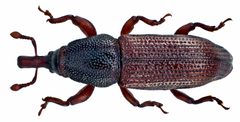
3Pentarthrini is a tribe of true weevils within the Cossoninae, Curculionidae. The tribe encompasses approximately 40 distributed across multiple continents. Members are generally small to minute weevils associated with woody substrates and decaying plant material. The group is poorly studied at the level, with most biological and ecological details remaining undocumented.


Pronunciation
How to pronounce Pentarthrini: //pɛnˈtɑrθrɪnaɪ//
These audio files are automatically generated. While they are not always 100% accurate, they are a good starting point.
Identification
Pentarthrini can be distinguished from other Cossoninae tribes by a combination of rostral and antennal characters, though precise diagnostic features require examination. The tribe generally includes small-bodied weevils with compact forms typical of wood-boring Cossoninae. Definitive identification to or species level necessitates dissection and reference to specialized taxonomic literature.
Images
Habitat
in this tribe are primarily associated with dead and decaying wood, including fallen branches, stumps, and subcortical . Some have been recorded from leaf litter and compost. The microhabitat preference for moist, decomposing woody substrates is consistent with the broader of the Cossoninae.
Distribution
The tribe has a distribution with recorded from the Palearctic, Nearctic, Neotropical, Afrotropical, Oriental, and Australasian regions. Individual genus distributions vary considerably, with some restricted to single biogeographic realms and others more widespread.
Ecological Role
As decomposers of dead wood, members of Pentarthrini contribute to nutrient cycling in forest . Their tunneling activities in decaying wood facilitate further decomposition by fungi and other organisms. Some may serve as prey for small in the subcortical .
Human Relevance
No significant direct economic impact has been documented. The tribe is occasionally encountered in stored products and imported timber, where some may be mistaken for pests. A few , particularly Euophryum, have been noted in association with human structures in Europe.
Similar Taxa
- CossoniniAnother tribe within Cossoninae; Pentarthrini can be distinguished by rostral groove structure and antennal insertion characters, though separation requires careful examination.
- DryotribiniShares small size and wood-associated habits; differs in details of mandibular structure and prosternal channel .
More Details
Taxonomic uncertainty
The tribal classification within Cossoninae remains unstable, with some authorities questioning the monophyly of Pentarthrini. Molecular phylogenetic studies are needed to clarify relationships among the constituent .
Undescribed diversity
Many contain numerous undescribed species, particularly in tropical regions. The actual of the tribe is likely substantially higher than currently recognized.