
Orchestomerus
W.G. Dietz, 1896
minute seed weevils
Species Guides
4Orchestomerus is a of minute seed weevils in the Curculionidae, established by W.G. Dietz in 1896. The genus comprises approximately 14 described . These beetles are small weevils associated with seeds, though specific relationships remain poorly documented for most species.
Pronunciation
How to pronounce Orchestomerus: /ɔːrˈkɛstoʊˌmɛrəs/
These audio files are automatically generated. While they are not always 100% accurate, they are a good starting point.
Identification
Identification to requires examination of genitalic and other internal characters; external alone is insufficient for reliable determination. The genus is distinguished from related seed weevil genera by subtle structural features of the rostrum and male genitalia. keys for North American Curculionidae should be consulted.
Images
Appearance
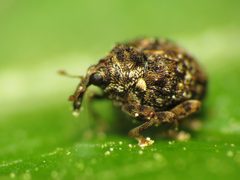
Small-bodied weevils with the characteristic elongated snout (rostrum) of Curculionidae. Members of this are minute in size, consistent with the . Detailed morphological descriptions for the genus as a whole are limited in available sources.
Habitat
associations are poorly documented at the level. Individual have been collected in various terrestrial environments, likely associated with plants whose seeds serve as larval food sources.
Distribution
North America; specific range boundaries for the as a whole are not well established in available literature.
Diet
Larval development occurs within seeds; specific plant associations are documented for some but not generalized across the .
Life Cycle
Complete with , larva, pupa, and stages. Larvae develop internally within seeds, feeding on embryonic tissues and endosperm. This endophytic larval habit is characteristic of seed weevils but specific developmental timelines for Orchestomerus are not well documented.
Ecological Role
Seed ; larvae reduce seed viability of plants, potentially influencing plant . Specific ecological impacts have not been quantified for most .
Human Relevance
No documented economic importance; not known as agricultural pests. Some may incidentally affect native plant seed production.
Similar Taxa
- Other Curculionidae seed weevil genera (e.g., Smicronyx, Tychius)Similar minute size and seed-feeding habit; distinguished by rostral proportions, antennal insertion, and male genitalic structure
More Details
Taxonomic history
The was established by William G. Dietz in 1896. The 14 currently recognized have been described across multiple decades, with modern revisions needed for some species groups.
Research needs
Basic including associations, , and geographic distributions remain unknown for most . The would benefit from modern taxonomic revision and molecular phylogenetic study.