
Apinocis
Lea, A.M., 1927
Sugarcane rootstock weevil
Species Guides
10- Apinocis blanditus
- Apinocis deplanatus(sugarcane rootstock weevil)
- Apinocis limbifer
- Apinocis longipennis(High Plains grasshopper)
- Apinocis nasutus
- Apinocis planiusculus
- Apinocis punctiger
- Apinocis saccharidis
- Apinocis subnudus
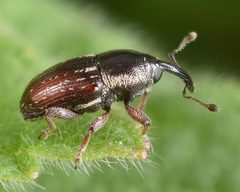
Apinocis is a of weevils in the Curculionidae, established by Lea in 1927. The best-known is Apinocis deplanatus, commonly called the sugarcane rootstock weevil, which sporadically infests sorghum and sugarcane. are small, dark beetles that overwinter in plant debris and migrate from wild grasses to cultivated crops. Larvae tunnel into stalk bases, causing lodging and secondary .
Pronunciation
How to pronounce Apinocis: /ˌæpɪˈnoʊsɪs/
These audio files are automatically generated. While they are not always 100% accurate, they are a good starting point.
Identification
are identified by their small size (3 mm), dark brown to black coloration, and typical curculionid weevil with an elongated rostrum. Larvae are found tunneling in stalk bases just above or below the soil surface, often at nodes. The combination of (sorghum/johnsongrass stalk bases), larval location in outer stalk tissues near nodes, and small adult size separates Apinocis from larger stalk-boring weevils and other Curculionidae.
Images
Habitat
Agricultural fields and adjacent wild grass areas, particularly where johnsongrass (Sorghum halepense) is abundant. overwinter beneath plant residues on the ground. Larvae inhabit the interior of grass stalks at or below soil level.
Distribution
Documented from regions where sorghum and sugarcane are cultivated, with records indicating presence in areas supporting johnsongrass . Specific geographic range beyond this is not well documented in available sources.
Seasonality
emerge from sites in early spring and infest wild grasses initially, later moving to sorghum. Multiple per year are possible given a generation time of approximately 40 days. Activity peaks during dry periods.
Diet
Larvae feed internally on sorghum and grass stalk tissues, tunneling in pith and outer stalk surfaces. feed externally on young sorghum leaves, creating pinpoint holes.
Host Associations
- Sorghum bicolor - larval Primary cultivated ; larvae tunnel stalk bases causing lodging
- Sorghum halepense - larval and Johnsongrass; early-season wild before to cultivated sorghum
- Saccharum officinarum - larval Sugarcane; original reflects association with this crop
Life Cycle
are deposited in small punctures made by females at the base of plants, concealed within the tissue. Approximately 16 eggs are laid per female. Eggs hatch in 6 days. Larvae develop for approximately 34 days (total time ~40 days minus egg stage). Larvae tunnel into stalks just above or below the soil surface, often at nodes. occurs within the stalk. emerge and may feed on leaves before reproducing. occurs as adults beneath plant residues.
Behavior
are relatively sedentary, hiding in ground debris. Females use mouthparts to create oviposition punctures at plant bases. Larvae tunnel in stalk periphery rather than central pith, distinguishing their damage pattern from other stalk borers. Adults migrate from wild grasses to cultivated sorghum seasonally. capability is presumed but not explicitly documented.
Ecological Role
Primary consumer of grass stems. Larval tunneling creates entry points for stalk-rot , indirectly increasing plant . appear tied to dry conditions and abundance of johnsongrass. Serves as prey for and , though specific natural enemies are not documented.
Human Relevance
Minor agricultural pest of sorghum and sugarcane. Damage is sporadic and locally concentrated, typically insufficient to warrant control measures. have not been established. Cultural practices that reduce johnsongrass abundance may lower risk. No insecticidal control is usually required.
Similar Taxa
- Diatraea saccharalisSugarcane borer is a (Lepidoptera) with very different ; larvae tunnel central pith rather than outer stalk surfaces and have conspicuous body spots absent in Apinocis larvae
- Elasmopalpus lignosellusLesser cornstalk borer is a with bluish-green larvae having transverse reddish-brown bands and silken tunnels covered with soil; Apinocis larvae are white, unbanded, and tunnel without silk
- Sphenophorus spp. weevils are larger, more robust, and larvae typically feed in crowns and roots rather than stalk bases; often have distinctive body sculpturing absent in Apinocis
More Details
Taxonomic note
The was originally described as Apinocis by Lea in 1927. Some sources list Anacentrinus as a synonym or alternate name, particularly for the A. deplanatus.
Damage symptoms
Infested plants appear drought-stressed due to impaired water transport from larval tunneling. Lodging (falling over) may occur. Pinpoint leaf holes indicate feeding but are minor compared to larval damage.