
Stenopterapion
Bokor, 1923
Species Guides
1Stenopterapion is a of weevils in the Brentidae, established by Bokor in 1923. It contains approximately six described distributed primarily in Europe. The genus is characterized by a pear-shaped body form typical of many brentid weevils. Species within this genus are relatively small and associated with herbaceous vegetation.
Pronunciation
How to pronounce Stenopterapion: /stɛnɒptɛˈræpɪɒn/
These audio files are automatically generated. While they are not always 100% accurate, they are a good starting point.
Identification
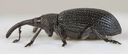
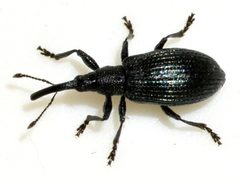
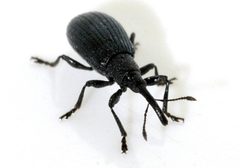
Stenopterapion can be distinguished from other brentid by their compact, pear-shaped body and relatively short, broad rostrum compared to some elongate brentids. The genus is small-bodied, with species generally under 5mm. are geniculate (elbowed) and inserted partway along the rostrum. Specific species-level identification requires examination of genitalia and subtle body proportions.
Images
Habitat
Associated with herbaceous vegetation, particularly leguminous plants. Found in meadows, grasslands, and disturbed open where plants occur.
Distribution
Primarily Palearctic distribution, with records from northern Europe (Norway, Sweden) and central Europe. The has a European center of diversity.
Seasonality
are active during the warmer months; specific varies by and latitude. Most observations occur from late spring through summer.
Host Associations
- Melilotus - S. meliloti is associated with sweet clover (Melilotus)
- Leguminosae - -level association with legumes suggested by epithets and
Ecological Role
As herbivores on leguminous plants, in this contribute to plant-insect interactions in meadow and grassland . Their role as seed or folivores on legumes may influence plant .
Similar Taxa
More Details
Taxonomic History
Stenopterapion was long classified in the Apionidae, which is now treated as the Apioninae within Brentidae. The was established by Bokor in 1923 to accommodate previously placed in Apion with distinctive body form.
Species Count
The contains six described : S. cantabricum, S. dubium, S. intermedium, S. meliloti, S. scutellare, and S. subsquamosum. The epithet 'meliloti' indicates association with Melilotus (sweet clover).