
Alocentron
Schilsky, 1901
Species Guides
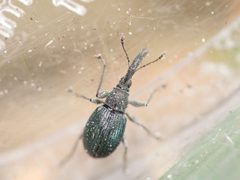
2Alocentron is a of weevils established by Schilsky in 1901. It belongs to the Brentidae (formerly often treated as Apionidae, which is now considered a within Brentidae). The genus contains multiple , with observations recorded across various regions. As a member of the weevil superfamily Curculionoidea, species in this genus possess the characteristic elongated snout typical of brentid weevils.
Pronunciation
How to pronounce Alocentron: /ˌæloʊˈsɛntrɒn/
These audio files are automatically generated. While they are not always 100% accurate, they are a good starting point.
Identification
Members of Alocentron can be distinguished from other brentid by genitalic and rostral characters, though specific diagnostic features require examination of and literature. The genus is placed in Brentidae based on the straight (not elbowed as in true Curculionidae) and other familial characteristics. -level identification within the genus is challenging and generally requires dissection and comparison with type material.
Images
Distribution
Records of Alocentron span multiple continents, with observations from Europe, Asia, and potentially other regions. The exact native range of the as a whole is not well-documented in readily available sources, and -level distributions vary.
Similar Taxa
More Details
Taxonomic history
The placement of Alocentron has been unstable in the literature. NCBI lists it in Apionidae, while GBIF and iNaturalist place it in Brentidae. Current consensus treats Apionidae as a (Apioninae) within the expanded family Brentidae, making both classifications partially correct depending on the rank applied.