
Stelidota coenosa
Erichson, 1843
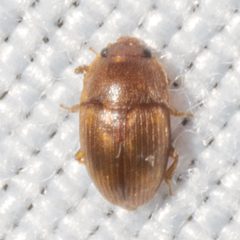
Stelidota coenosa is a small in the Nitidulidae, commonly known as sap beetles. It feeds on fermenting plant sap, overripe fruit, and other decaying organic matter. The occurs across North America and is frequently encountered in agricultural settings, particularly where fruit crops are present. It is one of several Stelidota species that can be challenging to distinguish without close examination.
Pronunciation
How to pronounce Stelidota coenosa: //stɛlɪˈdoʊtə siːˈnoʊsə//
These audio files are automatically generated. While they are not always 100% accurate, they are a good starting point.
Identification
Stelidota coenosa belongs to a of small, oval nitidulid beetles that generally lack distinctive external markings. -level identification within Stelidota requires examination of subtle morphological characters such as antennal club structure, punctation patterns on the , and male genitalia. It can be separated from the more commonly encountered Stelidota geminata by differences in the shape of the antennal club and the of elytral punctures, though these characters require magnification for reliable assessment.
Images
Distribution
North America
Diet
Fermenting plant sap, overripe fruit, and decaying organic matter.
Human Relevance
Stelidota coenosa is considered a minor pest of ripening and overripe fruit in agricultural contexts. It can contaminate fruit during harvest and may fungal . Its presence is often indicative of damaged or decaying fruit that requires removal.
Similar Taxa
- Stelidota geminataOverlaps in distribution and ; distinguished by antennal club structure and elytral punctation .
- Other Nitidulidae genera (e.g., Carpophilus, Glischrochilus)Share sap-feeding habits and small oval body form; Stelidota generally have shorter, more compact antennal clubs.
More Details
Taxonomic note
Stelidota coenosa was described by Wilhelm Ferdinand Erichson in 1843. The Stelidota contains approximately 20 described , most of which are poorly characterized in published literature.
Observation frequency
The has been documented in at least 283 iNaturalist observations, suggesting it is moderately well-recorded but likely underreported due to identification challenges.