
Omosita nearctica
Kirejtshuk, 1987
Northern Sap Beetle
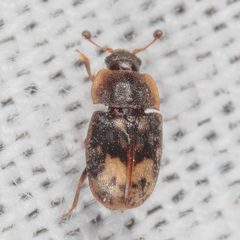
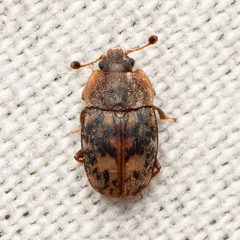
Omosita nearctica is a small sap-feeding beetle in the Nitidulidae, native to the Nearctic region. The is a stored-product pest with documented associations to carrion, giving it potential significance as both a biosecurity risk and a forensic indicator. It has established in South Africa, representing the first African record for this species. The mature larva was described for the first time in 2021 based on specimens collected from this introduced population.

Pronunciation
How to pronounce Omosita nearctica: /oʊˈmoʊsɪtə niˈɑrktɪkə/
These audio files are automatically generated. While they are not always 100% accurate, they are a good starting point.
Images
Habitat
Stored products; carrion. Associated with human-modified environments including stored food facilities and carrion sources.
Distribution
Native to the Nearctic region (Canada: New Brunswick, Nova Scotia, Ontario, Quebec). Established in South Africa, representing the first record for the African continent.
Life Cycle
Mature larvae have been described; complete with , larval, pupal, and stages. Specific developmental details beyond larval not documented.
Ecological Role
Potential biosecurity risk as a stored-product pest. Potential forensic utility for investigations involving carrion, given its documented association with decomposing animal matter.
Human Relevance
Stored-product pest of economic concern. Potential forensic applications in carrion-associated death investigations. Biosecurity risk due to establishment outside native range.
More Details
Taxonomic history
First described by Kirejtshuk in 1987. The first description of the mature larva was published in 2021 based on specimens from the introduced South African .
Invasion biology
Discovery of a single specimen in South Africa prompted a decade-long follow-up study that confirmed establishment through collection of breeding specimens, demonstrating successful in the introduced range.
Sources and further reading
- BugGuide
- Wikipedia
- GBIF taxonomy match
- iNaturalist taxon
- NCBI Taxonomy
- Bug Eric: Missing Sector Orbweaver, Zygiella x-notata
- Bug Eric: February 2009
- Bug Eric: Wasp Wednesday: Not What You Think
- Bug of the Week
- The first record of Omosita nearctica Kirejtshuk (Coleoptera, Nitidulidae) in South Africa, with the first description of its mature larva