
Omosita
Erichson, 1843
Species Guides
3- Omosita colon
- Omosita discoidea
- Omosita nearctica(Northern Sap Beetle)
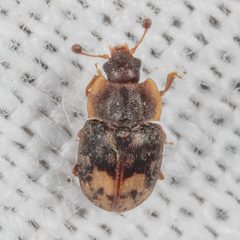
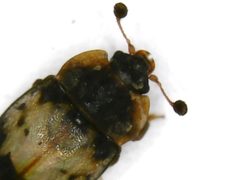
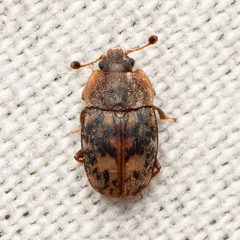
Omosita is a of sap beetles ( Nitidulidae) erected in 1843. The genus comprises five described distributed across the Holarctic and introduced regions. Omosita species are notable for their association with stored products and carrion, with documented forensic significance due to their presence on human remains. Larvae have been recovered from decomposing human bone and successfully analyzed for human mitochondrial .
Pronunciation
How to pronounce Omosita: /ˌoʊ.moʊˈsiː.tə/
These audio files are automatically generated. While they are not always 100% accurate, they are a good starting point.
Identification
of Omosita can be distinguished using morphological keys; a comprehensive key to all five species is available in recent taxonomic literature. The is characterized by typical nitidulid features including with multiple types. Larval identification requires examination of mature specimens; the mature larva of O. nearctica has been formally described.
Images
Habitat
Associated with stored products and carrion environments. O. nearctica has established breeding in South Africa after introduction from its native Nearctic range.
Distribution
Holarctic distribution with introduced . Native range includes Nearctic (O. nearctica) and Palearctic regions. Documented establishment in South Africa for O. nearctica.
Host Associations
- human remains - larvae found on decomposing boneforensic significance; mtDNA recovery demonstrated
- stored products - pest-level characterization
Life Cycle
Larval stage has been documented on human remains and in stored product environments. Mature larvae of O. nearctica have been formally described.
Behavior
Larvae have been recovered from late decompositional stage human remains. Associated with carrion and stored products.
Human Relevance
Stored-product pest with biosecurity risk potential. Forensic utility: larvae yield human mitochondrial from remains, demonstrating value in for badly decomposed cases.
More Details
Forensic DNA recovery
First demonstration of human mtDNA recovery from necrophagous larvae; Omosita spp. larvae collected from human skeletal remains yielded mtDNA matching the individual.
Taxonomic history
erected by Wilhelm Ferdinand Erichson in 1843. Five currently recognized: O. colon, O. depressa, O. discoidea, O. funesta, and O. nearctica.
Sources and further reading
- BugGuide
- Wikipedia
- iNaturalist taxon
- NCBI Taxonomy
- Mitochondrial DNA Sequencing of Beetle Larvae (Nitidulidae: Omosita) Recovered From Human Bone
- A SEM study of the antenna and mouthparts of Omosita colon (Linnaeus) (Coleoptera: Nitidulidae)
- The first record of Omosita nearctica Kirejtshuk (Coleoptera, Nitidulidae) in South Africa, with the first description of its mature larva