
Cillaeinae
Kirejtshuk & Audisio, 1986
Genus Guides
3- Brachypeplus(sap beetle)
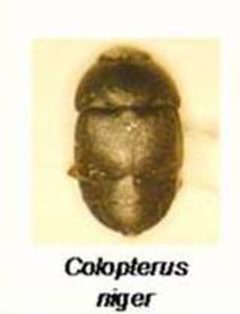
- Colopterus
- Conotelus(obscure sap beetle)
Cillaeinae is a of small sap-feeding beetles within the Nitidulidae, containing approximately 9 and at least 150 described . The group was formally established by Kirejtshuk & Audisio in 1986. Members are associated with fermenting plant materials and fungal substrates. The subfamily includes genera such as Brachypeplus, Colopterus, and Conotelus, which are distributed across multiple continents.
Pronunciation
How to pronounce Cillaeinae: /ˌsɪl.aɪˈiː.naɪ/
These audio files are automatically generated. While they are not always 100% accurate, they are a good starting point.
Identification
Cillaeinae can be distinguished from other Nitidulidae by a combination of morphological characters including with a distinct three-segmented club, and specific configurations of the prosternal process and mesoventrite. Members generally have compact, oval to elongate-oval bodies typical of nitidulid beetles. Accurate identification to subfamily level requires examination of mouthpart structure and details of the metaventrite. The subfamily lacks the pronounced emargination of the seen in some related subfamilies.
Images
Habitat
within Cillaeinae are found in environments where sap flows, fermenting plant materials, or fungal growth occurs. This includes wounded or decaying trees, fungal fruiting bodies, and accumulations of fermenting vegetation. Specific microhabitat preferences vary by and species.
Distribution
The has a broad distribution with representatives recorded from multiple continents including North America, South America, Europe, Asia, Africa, and Australia. Individual show varying geographic ranges; for example, Brachypeplus and Colopterus have wide distributions, while others may be more restricted.
Diet
Sap-feeding; members feed on fermenting plant sap, exudates from wounded trees, and associated fungal growth. Some have been observed on fungal fruiting bodies.
Behavior
are attracted to fermenting substrates and sap flows. Many are active at night or during periods when visiting these resources.
Ecological Role
Decomposers and sap-feeders that contribute to nutrient cycling in forest and woodland . Their association with fermenting materials and fungi places them within the guild of organisms that process decaying plant matter.
Human Relevance
Some may be minor pests in stored products or agricultural settings where fermenting materials accumulate. Generally of limited economic importance compared to other Nitidulidae such as Carpophilinae.
Similar Taxa
- CarpophilinaeAlso within Nitidulidae and associated with fermenting fruits and plant materials; distinguished by different antennal club structure and body proportions.
- NitidulinaeThe nominate of Nitidulidae, often found on similar substrates; differs in details of the prosternal process and wing venation.
More Details
Taxonomic History
The was established by Kirejtshuk & Audisio in 1986 based on phylogenetic analysis of morphological characters. Prior to this, many included were placed in broader groupings within Nitidulidae.