
Placonotus falinorum
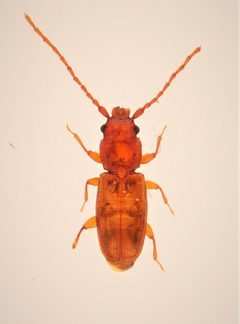
Placonotus falinorum is a of small in the Laemophloeidae, a group commonly known as lined flat bark beetles. The species is known from very few observations, reflecting either rarity or limited survey effort. Members of this are associated with dead or decaying wood and fungal substrates.
Pronunciation
How to pronounce Placonotus falinorum: //ˌplækoʊˈnoʊtəs ˌfeɪlɪˈnɒrəm//
These audio files are automatically generated. While they are not always 100% accurate, they are a good starting point.
Identification
Specific diagnostic features for P. falinorum are not documented in available literature. The Placonotus is characterized by flattened bodies, parallel-sided with distinct longitudinal or , and with a loose, elongate club. Accurate identification to level requires examination of male genitalia or other subtle morphological characters.
Images
Habitat
Inferred from : associated with dead wood, bark, and wood-decaying fungi. Specific microhabitat preferences for this are unrecorded.
Distribution
Known from two iNaturalist observations; precise locality data not specified in available sources. The Placonotus has representatives in multiple biogeographic regions.
Ecological Role
Inferred from : Laemophloeidae are generally saproxylic, contributing to decomposition of dead wood and nutrient cycling in forest .
Similar Taxa
- Other Placonotus speciesCongeneric share flattened body form and ; require detailed morphological examination for separation
- Other Laemophloeidae genera (e.g., Laemophloeus, Cryptolestes)Similar flattened habitus and preferences; differ in antennal club structure and elytral
More Details
Data Deficiency
This is documented by only two iNaturalist observations. No formal taxonomic description, type locality, or ecological study has been located. The specific epithet 'falinorum' suggests a patronym, but the honorees are unidentified in available sources.