
Placonotus
MacLeay, 1871
Species Guides
5- Placonotus falinorum
- Placonotus modestus(lined flat bark beetle)
- Placonotus nitens(lined flat bark beetle)
- Placonotus politissimus(lined flat bark beetle)
- Placonotus zimmermanni(Zimmermann's lined flat bark beetle)
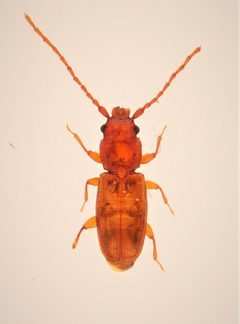
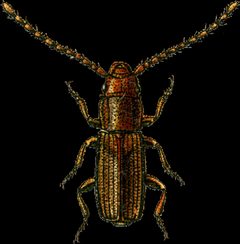
Placonotus is a of small beetles in the Laemophloeidae, comprising 40 recognized distributed across all continents except Antarctica. and larvae inhabit dead bark, where they feed on fungi. The genus exhibits distinctive morphological features including elongated, flattened bodies and modified male genital claspers. Taxonomic treatment remains incomplete for Asian, Pacific, and Australian regions, suggesting additional undescribed species exist.
Pronunciation
How to pronounce Placonotus: /ˌplækoʊˈnoʊtəs/
These audio files are automatically generated. While they are not always 100% accurate, they are a good starting point.
Identification
Distinguished from other Laemophloeidae by combination of: long ; frontoclypeal present; open coxal cavities; and broadly rounded intercoxal process of abdominal ventrite III. Male specimens may be identified by presence of abdominal claspers. -level identification requires examination of genitalic and other fine morphological characters.
Images
Appearance
Small beetles approximately 2 mm in length. Body elongate and flattened. long and . Presence of frontoclypeal . coxal cavities open. Abdominal ventrite III with broadly rounded intercoxal process.
Habitat
Found beneath dead bark of trees. Associated with decaying wood and fungal of bark substrates.
Distribution
Present on all continents except Antarctica. Documented from North America, South America, Europe, Africa, and India. Asian, Pacific, and Australian faunas remain taxonomically unworked.
Diet
and larvae feed on fungi growing under dead bark.
Life Cycle
Larvae develop under dead bark alongside . Specific developmental stages and duration have not been documented.
Behavior
and larvae occupy the same microhabitat under dead bark. Males use modified abdominal claspers during mating.
Ecological Role
Mycophagous decomposers contributing to nutrient cycling in dead wood and bark .
Similar Taxa
- Other Laemophloeidae generaPlaconotus is distinguished by the combination of open coxal cavities, frontoclypeal , and broadly rounded intercoxal process of ventrite III; many related differ in one or more of these character states.
More Details
Taxonomic status
The has received taxonomic treatment for the New World, Africa, Europe, and India. The Asian, Pacific, and Australian faunas remain unworked, and numerous unassigned and undescribed species are likely present in these regions.