Leptophloeus
Casey, 1916
Species Guides
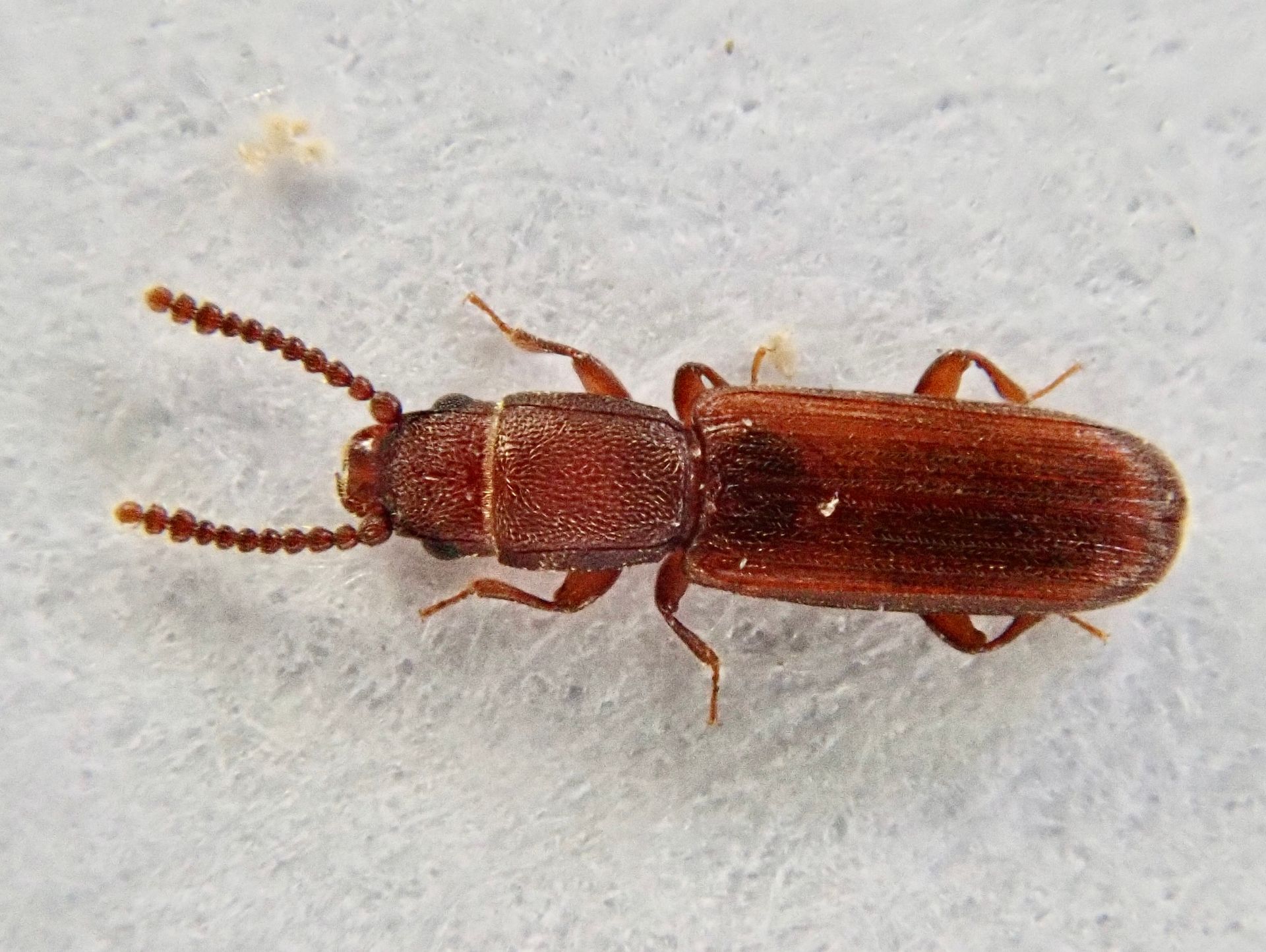
1- Leptophloeus angustulus(lined flat bark beetle)
Leptophloeus is a of flat bark beetles in the Laemophloeidae, containing approximately 30 described distributed across multiple continents. Members of this genus are small, flattened beetles adapted to living under bark and in similar cryptic . At least one species in Hawaii has been documented as a of economically significant scolytine pests in coffee and macadamia nut agroecosystems, with demonstrated potential for .
Pronunciation
How to pronounce Leptophloeus: /lɛpˈtoʊfloʊˌɛu/
These audio files are automatically generated. While they are not always 100% accurate, they are a good starting point.
Images
Habitat
Agricultural landscapes including coffee farms, macadamia nut farms, and mixed agroecosystems; various life stages have been found in at least seven different plant common to agricultural areas surrounding coffee farms. The as a whole is associated with bark-dwelling typical of Laemophloeidae.
Distribution
Hawaii (coffee and macadamia nut growing regions); records from Denmark, Norway, and Sweden (GBIF); global distribution includes described from Europe (Erichson, Grouvelle, Wollaston), North America (LeConte, Casey), and Asia (Sasaji, Liu & Li).
Diet
At least one (Leptophloeus sp.) in Hawaii is predatory, feeding on scolytine pests including (), Hypothenemus obscurus (tropical nut borer), and Xylosandrus compactus (black twig borer). Diet of other species in the is not documented.
Host Associations
- Hypothenemus hampei - ; molecular confirmation in Hawaii
- Hypothenemus obscurus - tropical nut borer; molecular confirmation in Hawaii
- Xylosandrus compactus - black twig borer; molecular confirmation in Hawaii
Life Cycle
occurs on multiple plant in agricultural landscapes; various life stages (, larvae, pupae, ) have been found in field conditions in Hawaii, indicating complete development occurs on host plants.
Behavior
Limited from release points has been observed in Hawaii, with individuals recaptured near release sites at 1, 2, and 7 weeks after augmentative releases.
Ecological Role
Natural enemy of significant agricultural scolytine pests in Hawaii; demonstrated potential for in coffee and macadamia nut agroecosystems. Ecological role of other in the is not documented.
Human Relevance
Used or considered for of and other scolytine pests in Hawaiian agriculture; established in agricultural landscapes through augmentative releases.
Similar Taxa
- Cathartus quadricollisCo-occurs in Hawaii coffee and macadamia nut agroecosystems as a predatory flat bark beetle; both prey on the same scolytine pests and were studied together, though C. quadricollis belongs to Silvanidae rather than Laemophloeidae.
More Details
Taxonomic note
The was described by Casey in 1916. have been described by multiple authors including Erichson, Grouvelle, Wollaston, LeConte, Sasaji, Lefkovitch, and Liu & Li (2025), indicating a broad geographic distribution. The specific epithet of the Hawaiian agent has not been determined in published literature ('Leptophloeus sp.').