
Brachypterolus
Grouvelle, 1913
short-winged flower beetles
Species Guides
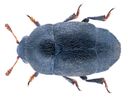
1- Brachypterolus pulicarius(Toadflax Flower Beetle)
Brachypterolus is a of short-winged flower beetles in the Kateretidae, containing approximately six described . Members of this genus are associated with toadflax plants (Linaria spp.) and have been introduced to North America as inadvertent agents for toadflax species. The genus is characterized by reduced wing development, consistent with its name meaning "short-winged."
Pronunciation
How to pronounce Brachypterolus: /ˌbrækiːptəˈroʊləs/
These audio files are automatically generated. While they are not always 100% accurate, they are a good starting point.
Images
Habitat
Associated with toadflax plants (Linaria spp.) in open, disturbed ; found on flowering stems and developing seed capsules of plants.
Distribution
Native to the Palearctic region; records from Denmark, Norway, and Sweden; introduced to North America where Brachypterolus pulicarius has established on yellow toadflax (Linaria vulgaris) and Dalmatian toadflax (Linaria genistifolia ssp. dalmatica).
Diet
and larvae feed on developing seeds and reproductive tissues of toadflax plants (Linaria spp.).
Host Associations
- Linaria vulgaris - yellow toadflax; preferred in North America
- Linaria genistifolia ssp. dalmatica - Dalmatian toadflax; secondary with weaker preference
Behavior
aggregate on plants, showing preference for plants occupied by conspecifics, likely mediated by or host-plant volatiles induced by activity.
Ecological Role
Seed ; reduces seed set in toadflax , functioning as an inadvertent agent for toadflax in North America.
Human Relevance
Brachypterolus pulicarius introduced to North America as an inadvertent agent; currently redistributed for management of toadflax, though its preference for yellow toadflax over Dalmatian toadflax limits effectiveness on the latter.
Similar Taxa
- Other Kateretidae generaBrachypterolus distinguished by short-winged condition (brachyptery) and specific association with Linaria plants; other kateretids typically have fully developed wings and different host associations.