
Brachypterolus pulicarius
(Linnaeus, 1758)
Toadflax Flower Beetle, Toadflax Flower-eating Beetle, Antirrhinum Beetle
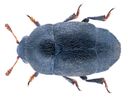
Brachypterolus pulicarius is a small short-winged flower beetle in the Kateretidae. Native to Europe and Northern Asia, it was inadvertently introduced to North America where it has become established as a agent of toadflaxes (Linaria ). The exhibits strong fidelity to yellow toadflax (Linaria vulgaris) and Dalmatian toadflax (L. dalmatica), feeding on floral tissues and reducing seed set in these weeds.
Pronunciation
How to pronounce Brachypterolus pulicarius: /brækˌɪptəˈroʊləs ˌpjuːlɪˈkɛəriəs/
These audio files are automatically generated. While they are not always 100% accurate, they are a good starting point.
Identification
A small in the Kateretidae, distinguished by short that leave much of the exposed. Found in association with Linaria flowers in its introduced North American range. Positive identification requires examination of genitalia or expert confirmation, as Kateretidae are morphologically similar.
Images
Habitat
Associated with toadflax plants (Linaria vulgaris and L. dalmatica) in disturbed , roadsides, rangelands, and agricultural areas where these weeds occur. Native range habitat requirements are less documented but presumably tied to native Linaria or related Scrophulariaceae .
Distribution
Native to Europe and Northern Asia (excluding China). Inadvertently introduced to North America, where it is established in regions with toadflax , including the western United States and Canada. Specific distribution within native range is poorly documented.
Diet
and larvae feed on floral tissues of yellow toadflax (Linaria vulgaris) and Dalmatian toadflax (L. dalmatica). Larval development has been observed only on these two . Adults show strong rejection of Linaria repens and Antirrhinum majus, with limited acceptance of L. genistifolia.
Host Associations
- Linaria vulgaris - primary Strong preference for feeding and oviposition; supports complete larval development
- Linaria dalmatica - primary Strong preference for feeding and oviposition; supports complete larval development
- Linaria genistifolia - secondary Limited acceptance; some feeding and oviposition observed but reduced
- Linaria repens - rejected Strong behavioral rejection; no oviposition observed
- Antirrhinum majus - rejected Strong behavioral rejection; no oviposition observed
Life Cycle
Larval development occurs within plant floral tissues. Successful development to adulthood has been documented only on Linaria vulgaris and L. dalmatica. Oviposition is strongly preferential toward these primary hosts. Detailed description of , pupal, and longevity stages is not available.
Behavior
exhibit strong fidelity with hierarchical preference for yellow toadflax over Dalmatian toadflax. Demonstrates toward plants bearing conspecifics, likely mediated by or host-plant volatiles induced by activity. Beetles collected from Dalmatian toadflax show weaker preference for yellow toadflax than those collected from yellow toadflax, suggesting potential host-associated experience or minor local .
Ecological Role
Acts as a agent of toadflaxes by reducing seed set through floral feeding. Efficacy in field conditions may be limited by intraguild and competition from other established herbivores. Narrow range minimizes risk to non-target native plants.
Human Relevance
Inadvertently introduced to North America, likely through historical importation of ornamental plants. Currently managed as a agent for toadflaxes, though redistribution onto Dalmatian toadflax is not supported by preference research. Not known to cause damage to agricultural crops or ornamental plants outside its toadflax host range.
Similar Taxa
- Other Kateretidae speciesShort-winged flower beetles share similar ; require expert examination for differentiation
- Other Brachypterolus speciesCongeneric may overlap in distribution and ; precise identification requires genitalia examination
More Details
Biological Control Implications
preference research indicates that redistributing North American onto Dalmatian toadflax is unlikely to be effective due to strong preference for yellow toadflax. Beetles show behavioral barriers that prevent use of some potential host plants even when physical contact occurs.
Introduction History
The mechanism of introduction to North America is not precisely documented but is presumed to have occurred inadvertently through trade in ornamental plants, given its association with Linaria and Antirrhinum in the native range.