
Languria taedata
LeConte, 1854
lizard beetle
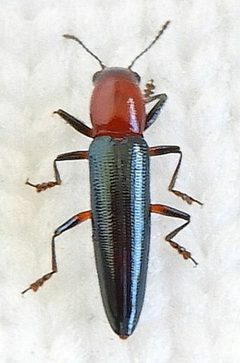
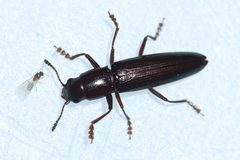
Languria taedata is a polymorphic lizard distributed along the eastern coast of North America. are dark, elongate beetles measuring 9–11 mm. The species exhibits notable color variation, including a distinctive all- form ('Form C') found primarily along the western Gulf Coast—the first such form documented in the . Larvae develop internally within stems of Spartina alterniflora, the smooth cordgrass.
Pronunciation
How to pronounce Languria taedata: /læŋˈɡjʊəriə ˈtiːdəteɪtə/
These audio files are automatically generated. While they are not always 100% accurate, they are a good starting point.
Identification
are 9–11 mm long with an elongate body form. The shows : most individuals have variable coloration, but 'Form C' is entirely black (all-). Distinguished from related Languriinae by combination of size, eastern coastal distribution, and larval association with Spartina alterniflora. Formerly confused with L. erythrocephalus, now synonymized.
Images
Habitat
Coastal salt marshes dominated by Spartina alterniflora; wetlands.
Distribution
Eastern coastal states of North America; western Gulf Coast of the United States (all- 'Form C'); coastal Louisiana.
Diet
Larvae feed and develop within stems of Spartina alterniflora Loisel (Poaceae). diet unknown.
Host Associations
- Spartina alterniflora - larval Larvae develop inside stems
Life Cycle
Larvae grow inside stems of plant; specific site and details not documented.
Behavior
Exhibits with three recognized forms, including the all- 'Form C'.
Similar Taxa
- Languria erythrocephalusFormerly described as separate ; now synonymized with L. taedata based on examination of types and geographic variation.
- Other Languriinae generaKey to North American requires modification to accommodate the all- form of L. taedata.