
Parmulini
Poey, 1854
minute hooded beetles
Genus Guides
2- Arthrolips
- Clypastraea(minute hooded beetles)
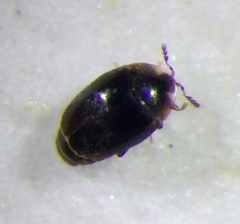
Parmulini is a tribe of minute hooded beetles in the Corylophidae, established by Poey in 1854. The tribe contains at least two —Arthrolips and Clypastraea—and more than 40 described . These beetles are characterized by their small size and hooded body form. Members of this tribe are part of the superfamily Coccinelloidea within the suborder Polyphaga.
Pronunciation
How to pronounce Parmulini: /ˈpɑr.mjuˌlaɪ.naɪ/
These audio files are automatically generated. While they are not always 100% accurate, they are a good starting point.
Identification
Parmulini can be distinguished from other tribes in Corylophidae by their minute size and hooded body structure. The tribe is distinguished from the related tribe Corylophini by subtle morphological differences in body form, though specific diagnostic features require detailed examination. Identification to level relies on characters separating Arthrolips (established 1854) from Clypastraea (established 1842).
Images
Distribution
The tribe has been documented across multiple regions based on iNaturalist observations, though specific range boundaries for the tribe as a whole are not well defined. Distribution patterns likely reflect the combined ranges of constituent Arthrolips and Clypastraea.
Similar Taxa
- CorylophiniAnother tribe in the same Corylophinae; distinguished from Parmulini by morphological differences in body structure and hood formation
More Details
Taxonomic history
The Clypastraea was originally described by Haldeman in 1842, predating Arthrolips (Wollaston, 1854), though both are now classified within the tribe Parmulini established by Poey in 1854. The authorship of the tribe is sometimes attributed differently in literature, but Catalogue of Life recognizes Poey, 1854 as the valid authority.
Observation data
As of the source data, Parmulini has 444 observations recorded on iNaturalist, indicating moderate documentation effort for this group of minute beetles.