
Clypastraea
Haldeman, 1842
minute hooded beetles, minute fungus beetles
Species Guides
8- Clypastraea biguttata(Clypastraea biguttata)
- Clypastraea fasciata(minute hooded beetle)
- Clypastraea lepida(minute hooded beetle)
- Clypastraea lugubris(minute hooded beetle)
- Clypastraea lunata(minute hooded beetle)
- Clypastraea obesa
- Clypastraea ornata(minute hooded beetle)
- Clypastraea sp-one(minute hooded beetle)
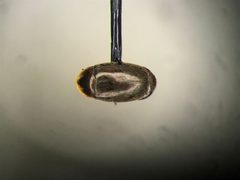
Clypastraea is a of minute hooded beetles ( Corylophidae) containing over 20 described . These beetles are exceptionally small, measuring approximately 2 mm in length. The genus is characterized by a distinctive morphological feature: the is concealed beneath a shelf-like projection of the pronotum. Members of this genus are primarily associated with fungal , particularly rotting wood and bark on dead trees.
Pronunciation
How to pronounce Clypastraea: /ˌklɪpəˈstriːə/
These audio files are automatically generated. While they are not always 100% accurate, they are a good starting point.
Identification
Distinguished from other small beetles by the pronounced hood-like pronotal projection that conceals the from above. This feature separates Corylophidae from superficially similar groups. Within the , -level identification requires examination of finer structural details such as antennal club form and precise pronotal shape. Specimens are often mistaken for specks of debris due to their minute size.
Images
Appearance
Extremely small beetles, approximately 2 mm in length. The most distinctive feature is the , which is hidden under a hood-like, shelf-shaped projection extending forward from the pronotum (the plate of the ). This pronotal projection gives the beetles their 'hooded' appearance. The overall body form is compact and minute.
Habitat
Primarily found in fungi and mold growing on rotting wood and under the bark of dead trees. Some in the broader occur on leaf surfaces, flowers, bark crevices, bird nests, or leaf litter, but Clypastraea specifically appears most strongly associated with decaying woody substrates.
Distribution
Recorded from Norway (NO) and Sweden (SE) in GBIF data. The occurs in North America with multiple found north of Mexico. Specific species distributions within the genus require further verification.
Diet
Larvae and feed on fungal spores. This mycophagous diet is consistent across life stages.
Life Cycle
Complete with , larva, pupa, and stages. Larvae are also mycophagous, feeding on fungal spores alongside adults.
Behavior
Slow-moving beetles that are easily overlooked due to minute size. Often detected by careful examination of fungal growths on decaying wood rather than active searching.
Ecological Role
Contributes to nutrient cycling through consumption of fungal spores in decaying wood . Part of the decomposer in forest .
Human Relevance
No direct economic or medical significance. Of interest to entomologists and naturalists documenting small diversity. May be encountered during wood decay assessment or fungal surveys.
Similar Taxa
- Other Corylophidae generaShare the hooded pronotal structure but differ in antennal club shape, body proportions, and preferences; precise identification requires microscopic examination.
- Small Corylophagidae or other minute PolyphagaSimilar size and cryptic habits, but lack the distinctive pronotal hood that characterizes Corylophidae.
More Details
Discovery challenges
Due to their minute size, members of this are frequently overlooked and may be mistaken for inanimate particles. The Corylophidae is unfamiliar to many general entomologists, leading to identification difficulties.
Taxonomic history
The was established by Haldeman in 1842. Over 20 are now recognized, though precise species boundaries and distributions remain understudied.