
Microweisea
Cockerell, 1903
Minute Lady Beetles
Species Guides
3- Microweisea coccidivora(Banded Pinpoint Lady Beetle)
- Microweisea minuta(Pinpoint Lady Beetle)
- Microweisea misella(Micro Lady Beetle)
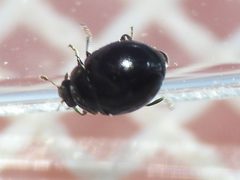
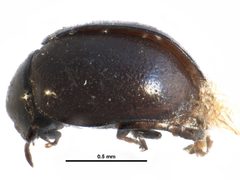
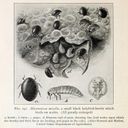
Microweisea is a of minute lady beetles ( Coccinellidae) established by Cockerell in 1903. These tiny beetles are among the smallest members of the lady beetle family. The genus currently includes approximately twelve described distributed primarily in the Americas. Microweisea species have been documented as of scale insects in urban environments, where they contribute to of these pests.
Pronunciation
How to pronounce Microweisea: /ˌmaɪkroʊˈwiːziə/
These audio files are automatically generated. While they are not always 100% accurate, they are a good starting point.
Identification
Distinguished from other lady beetles by extremely small body size. Separation from related in subtribe Microweiseina (e.g., Serangium, Stictospilus) requires examination of detailed morphological characters not specified in available sources. Identification to level requires knowledge and examination of .
Images
Habitat
Associated with -infested trees in urban environments. Has been observed on red maple (Acer rubrum) and willow oak (Quercus phellos) trees supporting gloomy scale (Melanaspis tenebricosa) . Specific natural requirements beyond urban scale-infested trees not documented.
Distribution
distributed in the Americas. Documented species occur in: United States (Texas, southeastern states), Colombia, and other Neotropical regions. Specific range maps or comprehensive distribution data not available.
Diet
Predatory. Documented feeding on scale insects (Coccoidea), specifically gloomy (Melanaspis tenebricosa). Attracted to scale honeydew and associated prey . Other specific prey items not documented.
Host Associations
- Melanaspis tenebricosa - preygloomy ; primary documented prey in urban environments
- Acer rubrum - red maple; urban tree for prey
- Quercus phellos - willow oak; urban tree for prey
Behavior
Documented as part of natural enemy associated with -infested urban trees. Movement between tree and lower vegetation not specifically studied for this , but implied by general in these systems.
Ecological Role
of scale insects in urban tree . Contributes to services by reducing . Part of diverse predator supported by scale-infested trees, which in turn support spider conservation in urban landscapes.
Human Relevance
Beneficial insect providing of insect pests in urban trees and landscapes. of scale in urban trees supports of Microweisea and other natural enemies, potentially reducing pest in nearby plants.
Similar Taxa
- SerangiumAlso in subtribe Microweiseina; shares minute body size and -feeding habits; distinguished by specific morphological characters requiring examination
- StictospilusAlso in subtribe Microweiseina; similar minute size and ecological role; generic boundaries based on subtle morphological differences
- Other CoccinellidaeDistinguished by extremely small body size; most lady beetles substantially larger
More Details
Taxonomic Note
Wikipedia states approximately six described , but Catalogue of Life and other sources list twelve species. This discrepancy may reflect recent taxonomic revisions or differing species concepts.
Research Context
Most ecological information on this comes from studies of urban tree at North Carolina State University, where Microweisea sp. was documented as part of natural enemy in -infested trees. Specific identifications were not made in these studies.