Scymnus suturalis
Thunberg, 1795
Pine Dusky Lady Beetle
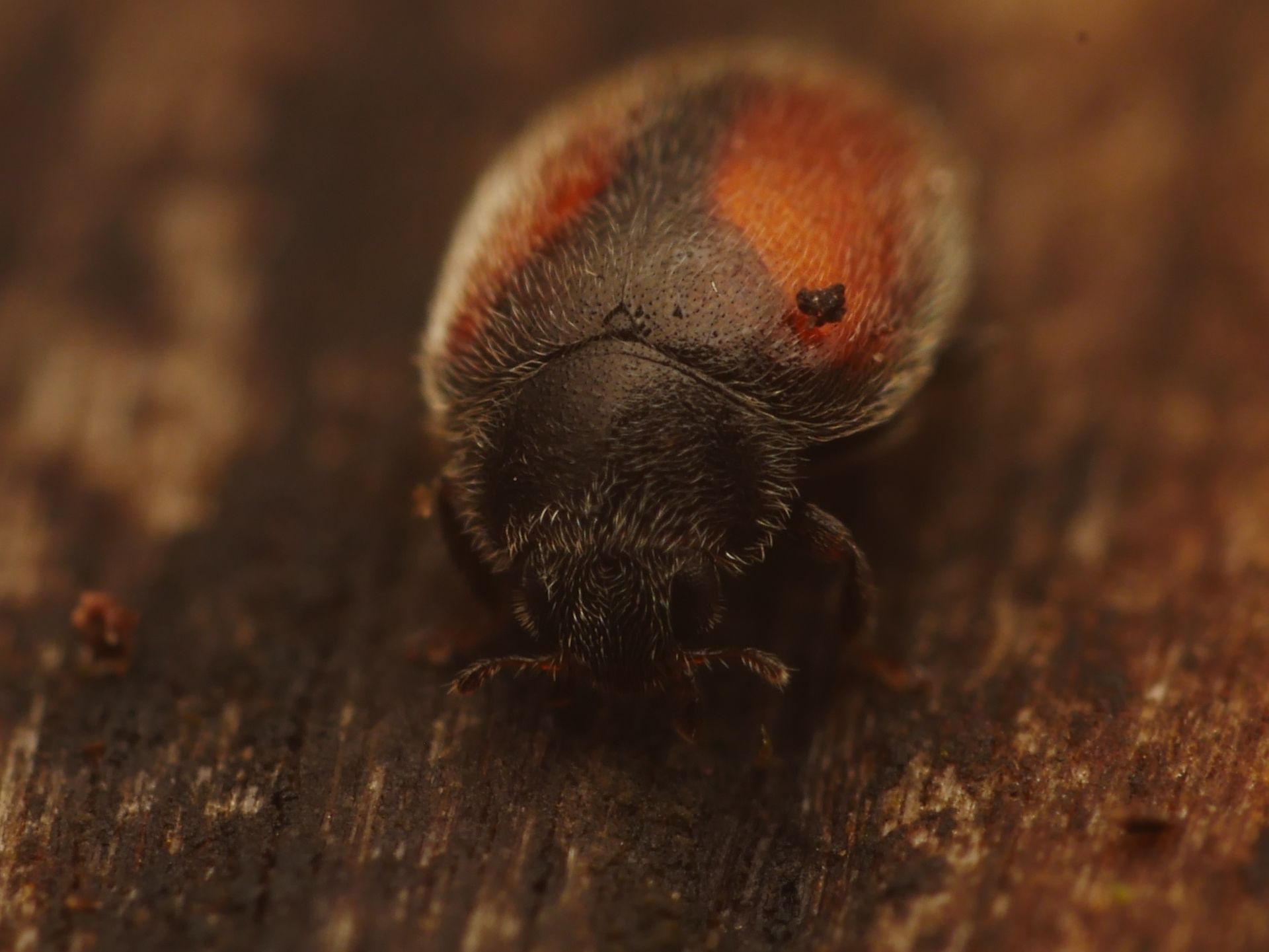
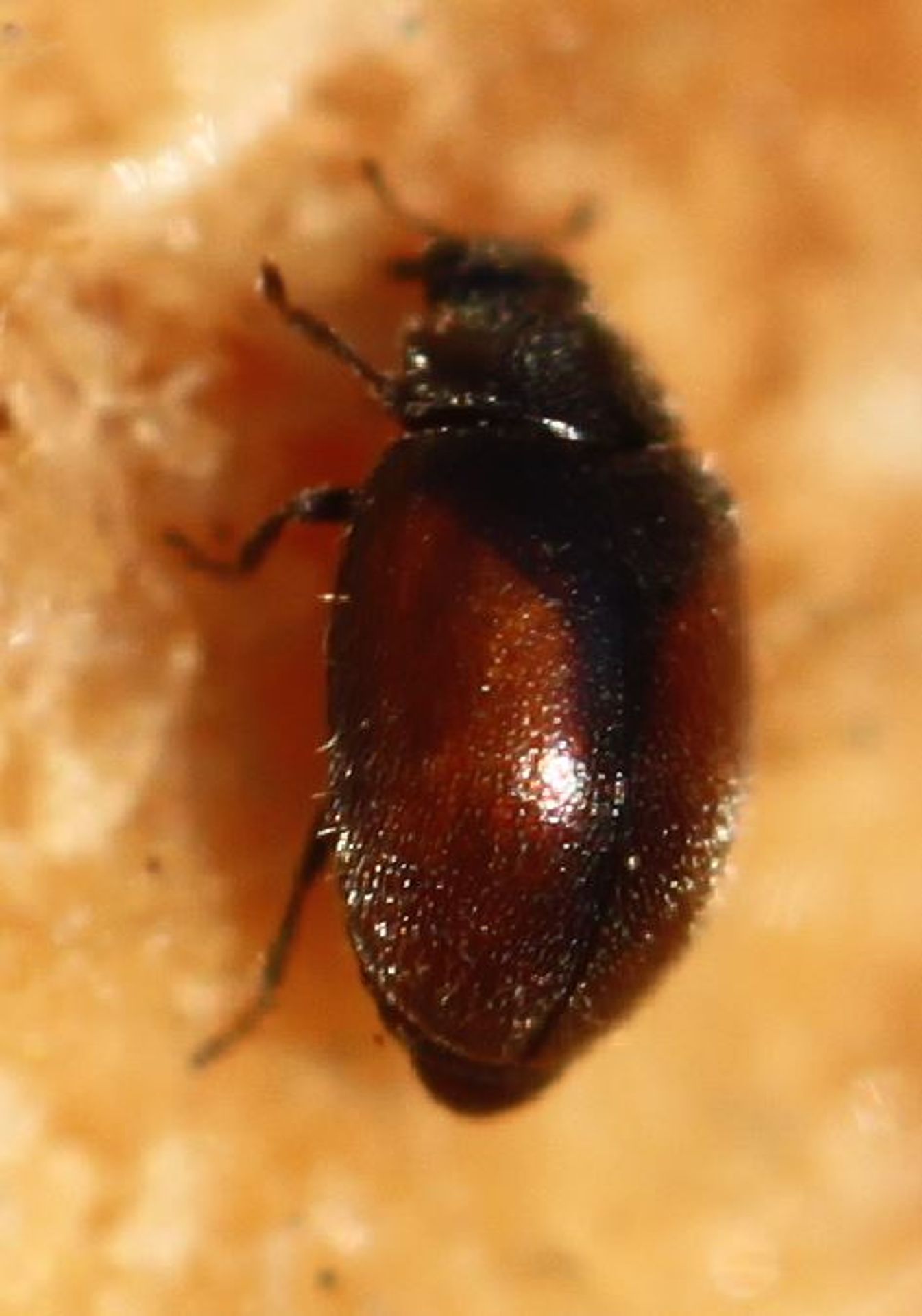
Scymnus suturalis is a tiny ladybird beetle (2.0–2.5 mm) native to the Palearctic, now introduced to North America. It inhabits coniferous and mixed forests, where it feeds primarily on scale insects (Coccoidea), particularly Chionaspis salicis, and adelgids on pine. The has been found under bark flakes, in moss on tree trunks, and in conifer litter. Its small size and hairy distinguish it from larger, more familiar ladybird species.
Pronunciation
How to pronounce Scymnus suturalis: /ˈsɪmnəs suːtʊˈreɪlɪs/
These audio files are automatically generated. While they are not always 100% accurate, they are a good starting point.
Identification
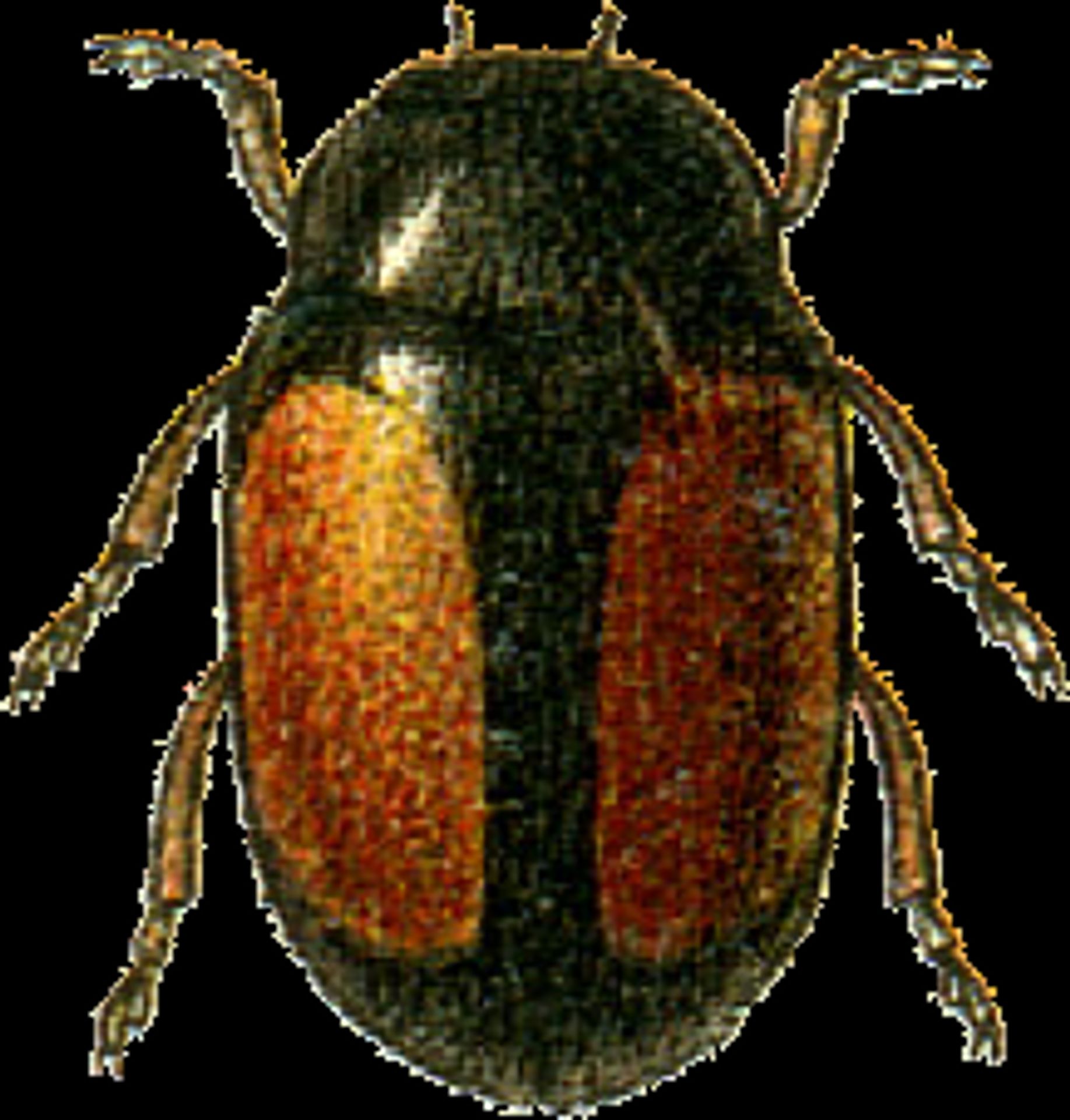
Distinguished from other Scymnus and small Coccinellidae by the combination of: (1) minute size (2.0–2.5 mm), smaller than most common ladybirds; (2) densely hairy with long, backward-directed setae; (3) dark brown marking behind scutellum extending along midline on reddish-brown background. Similar-sized in the lack this particular hair and pattern.
Images
Habitat
Coniferous forests, especially those dominated by Pinus sylvestris and other Pinus ; also mixed forests, marshes, gardens, and parks. Microhabitats include under bark flakes, in moss on tree trunks, and in coniferous litter.
Distribution
Native to the Palearctic: Europe, North Africa, European Russia, the Caucasus, Siberia, the Russian Far East, Belarus, Ukraine, Moldova, Transcaucasia, Western Asia, and Mongolia. Introduced to the United States (North America). Records also exist from the Azores (Faial, São Miguel, Santa Maria, Terceira).
Diet
Feeds on Coccoidea (scale insects), specifically associated with Chionaspis salicis. In Russia and Poland, also feeds on Adelgidae and other aphids on Pinus, less frequently on Betula pendula and other Betula , and Ligustrum vulgare.
Host Associations
- Chionaspis salicis - preyPrimary insect prey in Central Europe
- Pinus sylvestris - Primary conifer ; supports adelgid and prey
- Pinus - Various Pinus support prey
- Betula pendula - Secondary for prey
- Betula - Various birch
- Ligustrum vulgare - Occasional for prey
Ecological Role
of scale insects and adelgids in coniferous forest ; contributes to of pine-feeding Hemiptera.
Human Relevance
Potential value in of scale insects and adelgids in forestry and horticultural settings; introduced to North America, possibly for biocontrol purposes or inadvertently.
Similar Taxa
- Other Scymnus speciesSimilar minute size and general form; distinguished by elytral hair and color pattern of S. suturalis
- Larger Coccinellidae (e.g., Coccinella septempunctata)Much larger size (5–8 mm), less hairy , different color patterns