
Hyperaspis ornatella
Gordon, 1985
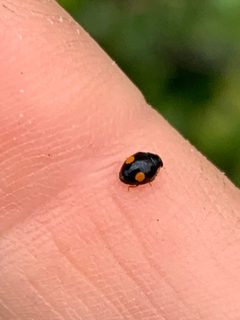
Hyperaspis ornatella is a small lady beetle in the Coccinellidae. measure approximately 2.4–2.6 mm in length. Males have a yellow and pronotum with a large rectangular black medial area; females have a black head and similar pronotal pattern. The are black with yellow spots. The name derives from Latin ornamentum, referencing its distinctive color pattern. The species is known from Florida and is part of a whose larvae are important agents of scale insects.
Pronunciation
How to pronounce Hyperaspis ornatella: //ˌhaɪˈpɪərəs.pɪs ˌɔr.nəˈtɛl.lə//
These audio files are automatically generated. While they are not always 100% accurate, they are a good starting point.
Identification
Distinguished from other Hyperaspis by the specific pattern of yellow and black markings, particularly the rectangular black area on the pronotum. Males identified by yellow ; females by black head. Similar to other small spotted lady beetles but with distinctive pronotal pattern.
Images
Habitat
Associated with -infested trees and shrubs. Likely found in urban and suburban environments where plants occur.
Distribution
Recorded from Florida, North America.
Diet
As with other Hyperaspis , likely predatory on scale insects (Coccoidea), including and stages. Specific prey for H. ornatella not documented.
Life Cycle
Complete with , larval, pupal, and stages. Larvae presumably waxy and -like in appearance, as characteristic of the . Adults overwinter in protected locations beneath bark or in leaf litter. Specific timing for H. ornatella not documented.
Ecological Role
Member of a known as important agents of scale insects. Larvae and prey on scale insects, potentially reducing pest on ornamental and native plants.
Human Relevance
Potential beneficial insect for of pests in horticultural settings. No documented negative impacts.
Similar Taxa
- Hyperaspis spp.Other in share similar size, general body form, and predatory habits on ; distinguished by specific spot patterns and coloration.
- Mealybugs (Pseudococcidae)Hyperaspis larvae are frequently misidentified as mealybugs due to their waxy, white covering; distinguished by faster movement when disturbed and predatory .
Misconceptions
Larvae of Hyperaspis are commonly mistaken for mealybugs or other plant pests due to their white waxy covering, leading to unnecessary applications that harm beneficial .