
Hippodamia glacialis extensa
Mulsant, 1850
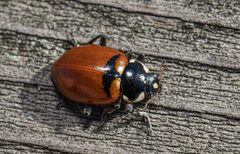
Hippodamia glacialis extensa is a of lady beetle in the Coccinellidae. It belongs to a widely recognized for its role as agents of aphids and other soft-bodied insect pests. As a subspecies of H. glacialis, it is part of a with a primarily northern distribution. The H. glacialis is sometimes referred to by the 'glacial lady beetle' in reference to its association with cooler, higher-elevation .
Pronunciation
How to pronounce Hippodamia glacialis extensa: /hɪpoʊˈdeɪmiə ɡlæˈsaɪəlɪs ɛkˈstɛn.sə/
These audio files are automatically generated. While they are not always 100% accurate, they are a good starting point.
Images
Distribution
North America, with records from Vermont in the northeastern United States. The parent Hippodamia glacialis has a transcontinental distribution across northern North America, and the extensa appears to represent an eastern .
More Details
Taxonomic context
Hippodamia glacialis extensa was described by Étienne Mulsant in 1850. The Hippodamia includes numerous of -feeding lady beetles, several of which are important in . The species H. glacialis is closely related to H. convergens (the convergent lady beetle), which is one of the most extensively studied and commercially distributed natural enemies in North American agriculture. However, H. glacialis is generally associated with more northern and higher-elevation than H. convergens.
Sources and further reading
- BugGuide
- GBIF taxonomy match
- iNaturalist taxon
- Birds, Bats or a Bloom? But No Splat! | Bug Squad
- Researchers Share New Method for Detecting Insect Egg Predators
- Bacteria Can Aid Aphids Against Predation and Parasitism
- From Burglars to Bugs: Anti-Theft Dye Useful in Insect-Tracking Studies
- The Darwin Beetle | Beetles In The Bush
- Hispanic Heritage Month: Publications Showcase