
Hippodamia glacialis
(Fabricius, 1775)
Glacial Lady Beetle
Species Guides
3- Hippodamia glacialis extensa
- Hippodamia glacialis glacialis
- Hippodamia glacialis lecontei(Leconte's lady beetle)
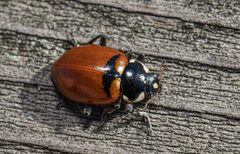
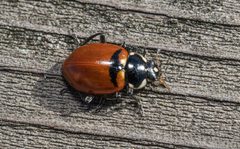
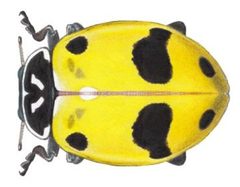
Hippodamia glacialis, known as the glacial lady beetle, is a of lady beetle in the Coccinellidae. It is native to North America, with documented ranging from eastern Canada to the western United States. The species was first described by Fabricius in 1775.
Pronunciation
How to pronounce Hippodamia glacialis: /ˌhɪp.oʊˈdeɪ.mi.ə ˈɡlæ.si.ə.lɪs/
These audio files are automatically generated. While they are not always 100% accurate, they are a good starting point.
Identification
Hippodamia glacialis can be distinguished from the similar convergent lady beetle (Hippodamia convergens) by differences in elytral markings and geographic distribution. The convergent lady beetle has prominent converging white lines on the pronotum, which are not present in H. glacialis. H. glacialis is generally associated with more northern and montane compared to H. convergens.
Images
Habitat
Associated with northern and montane environments, as suggested by its and distribution patterns. The nominate subspecies occurs from Quebec to South Carolina and west to Saskatchewan and Colorado, while additional subspecies are found in California and the southwestern United States.
Distribution
North America. Three are recognized with distinct ranges: H. g. glacialis occurs from Quebec to South Carolina and Alabama, west to Saskatchewan and Colorado; H. g. extensa is found in California; and H. g. lecontei ranges from Saskatchewan to New Mexico, west to Alberta and California.
Similar Taxa
- Hippodamia convergensConvergent lady beetle differs in having prominent converging white lines on the pronotum and is more widely distributed across North America, particularly in agricultural areas. H. glacialis lacks these pronotal markings and occupies more northern/montane .
More Details
Taxonomic Status
GBIF flags the taxonomic status of Hippodamia glacialis as 'DOUBTFUL', indicating potential uncertainty in its current classification that may warrant further taxonomic review.
Subspecies
Three are currently recognized: H. g. glacialis (nominate), H. g. extensa Mulsant 1850, and H. g. lecontei Mulsant 1850, distinguished primarily by geographic distribution.
Sources and further reading
- BugGuide
- Wikipedia
- GBIF taxonomy match
- iNaturalist taxon
- NCBI Taxonomy
- Birds, Bats or a Bloom? But No Splat! | Bug Squad
- Researchers Share New Method for Detecting Insect Egg Predators
- Bacteria Can Aid Aphids Against Predation and Parasitism
- From Burglars to Bugs: Anti-Theft Dye Useful in Insect-Tracking Studies
- The Darwin Beetle | Beetles In The Bush
- Hispanic Heritage Month: Publications Showcase