
Phyllotreta armoraciae
(Koch, 1803)
Horseradish Flea Beetle
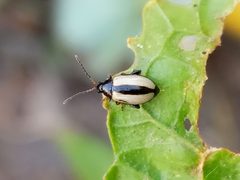
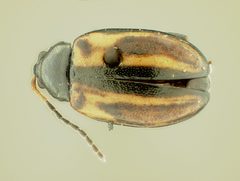
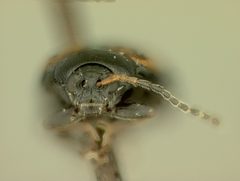
Phyllotreta armoraciae is a monophagous flea beetle specialized on horseradish (Armoracia rusticana). Research has identified its unique feeding chemistry: the requires synergistic combinations of glucosinolates and flavonol glycosides (specifically kaempferol 3-O-xylosylgalactoside and quercetin 3-O-xylosylgalactoside) for feeding stimulation, marking the first documented case of a crucifer-feeding insect using non-glucosinolate as feeding stimulants. Two are recognized: P. a. armoraciae and P. a. biplagiata.
Pronunciation
How to pronounce Phyllotreta armoraciae: //ˌfɪloʊˈtɹiːtə ˌɑrmoʊˈreɪʃi.aɪ//
These audio files are automatically generated. While they are not always 100% accurate, they are a good starting point.
Images
Habitat
Agricultural and cultivated areas where horseradish (Armoracia rusticana) is grown; associated with Brassicaceae plants.
Distribution
North America and Europe; specific records from Belgium and other European localities.
Diet
herbivore feeding on horseradish (Armoracia rusticana). Laboratory studies show feeding responses to several Brassicaceae including Brassica nigra, Nasturtium microphyllum, Sinapis alba, and Sisymbrium officinale, though field range appears restricted primarily to horseradish. Feeding requires specific chemical stimuli: combinations of allylglucosinolate with flavonol glycosides (kaempferol 3-O-xylosylgalactoside and/or quercetin 3-O-xylosylgalactoside); glucosinolates alone are insufficient feeding stimulants.
Host Associations
- Armoracia rusticana - primary horseradish; monophagous specialization in field
- Brassica nigra - laboratory acceptable in ; shares allylglucosinolate profile with horseradish
- Nasturtium microphyllum - laboratory acceptable despite lacking allylglucosinolate as major component
- Sinapis alba - laboratory acceptable in laboratory conditions
- Sisymbrium officinale - laboratory acceptable in laboratory conditions
Behavior
plant selection mediated by chemical cues. Feeding stimulation requires synergistic interaction between glucosinolates and flavonol glycosides; neither compound class alone is sufficient. This represents a distinctive chemical recognition system among crucifer-feeding insects.
Ecological Role
herbivore on cultivated horseradish; potential pest in agricultural contexts. Chemical research indicates complex plant-insect involving secondary metabolite recognition.
Human Relevance
Agricultural pest of horseradish crops. Subject of research on insect-plant chemical , particularly regarding the role of flavonol glycosides in recognition. Mentioned in studies evaluating neonicotinoid efficacy for flea beetle control in oilseed rape, though this appears to reference related Phyllotreta rather than P. armoraciae specifically.
Similar Taxa
- Phyllotreta cruciferaeAnother flea beetle in same ; both feed on Brassicaceae but P. cruciferae is oligophagous on various crucifers rather than monophagous on horseradish
- Phyllotreta striolataSimilar size and appearance; feeder on Brassicaceae without specialized chemical requirements of P. armoraciae
More Details
Chemical Ecology Significance
Phyllotreta armoraciae was the first crucifer-feeding insect documented to use non-glucosinolate compounds (flavonol glycosides) as essential feeding stimulants. This challenges the paradigm that glucosinolates alone mediate recognition in Brassicaceae .
Subspecies
Two recognized: Phyllotreta armoraciae armoraciae (Koch, 1803) and Phyllotreta armoraciae biplagiata Chittenden.
Sources and further reading
- BugGuide
- Wikipedia
- GBIF taxonomy match
- iNaturalist taxon
- NCBI Taxonomy
- Occasional Pests - AgriLife Extension Entomology
- The Drugs (Neonicotinoids) Don’t Work 3 - Buglife Blog - Buglife
- HOST PLANT SELECTION OF THE HORSE‐RADISH FLÈA BEETLE PHYLLOTRETA ARMORACIAE (COLEOPTERA: CHRYSOMELIDAE): FEEDING RESPONSES TO GLUCOSINOLATES FROM SEVERAL CRUCIFERS
- HOST PLANT SELECTION OF THE HORSERADISH FLEA BEETLE PHYLLOTRETA ARMORACIAE (COLEOPTERA: CHRYSOMELIDAE): IDENTIFICATION OF TWO FLAVONOL GLYCOSIDES STIMULATING FEEDING IN COMBINATION WITH GLUCOSINOLATES