
Chaetocnema hortensis
(Geoffroy, 1785)
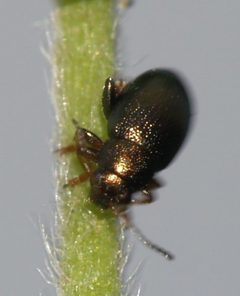
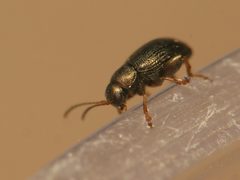
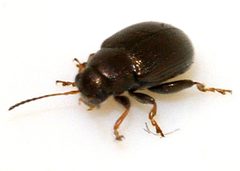
Chaetocnema hortensis is a flea beetle in the Chrysomelidae, Alticinae. The measures 1.5 to 2.3 mm in length and exhibits metallic coloration ranging from bronze or coppery to sometimes green. It is widespread across the Palearctic region, including Europe and eastward to the Amur region. The species has been recorded as a pest of crops.
Pronunciation
How to pronounce Chaetocnema hortensis: /ˌkiːtoʊkˈniːmə hɔːrˈtɛnsɪs/
These audio files are automatically generated. While they are not always 100% accurate, they are a good starting point.
Identification
Distinguished from similar flea beetles by its small size (1.5–2.3 mm), metallic bronze to green coloration, and Palearctic distribution. The Chaetocnema contains multiple small, metallic that require careful examination for definitive identification. Separation from C. quadricollis and other typically relies on subtle morphological characters of the tibiae, , and male genitalia.
Images
Appearance
Small measuring 1.5 to 2.3 mm in length. Body coloration is bronze or coppery, sometimes with metallic green tones. As a member of the flea beetle Alticinae, it possesses enlarged hind adapted for jumping.
Habitat
Agricultural and cultivated environments; associated with crop plants. Specific natural preferences beyond cultivated areas are not well documented.
Distribution
Palearctic region, widespread in Europe, extending east to the Amur region. Distribution records include the Azores islands (Faial, Flores, Graciosa, Pico, São Jorge).
Diet
Herbivorous; feeds on crop plants. Specific plant associations are not clearly documented in available sources.
Behavior
Possesses jumping ability characteristic of flea beetles (Alticinae), using enlarged hind legs to escape disturbance.
Ecological Role
Herbivore; crop pest. Specific ecological functions beyond agricultural pest status are not documented.
Human Relevance
Documented as a pest of agricultural crops. The extent of economic damage and specific crops affected are not detailed in available sources.
Similar Taxa
- Chaetocnema quadricollisSimilar small size and metallic appearance, but associated with Hibiscus (rosemallow) in North America and distinguished by plant and distribution.
- Chaetocnema pulicariaLarger corn flea beetle (approximately 2–3 mm), black rather than metallic, North American distribution, and major of Stewart's wilt in maize.
More Details
Taxonomic history
Originally described as Altica hortensis by Geoffroy in 1785, later transferred to Chaetocnema. The basionym Altica hortensis reflects early classification within the broader flea beetle group.
Research limitations
Available literature focuses primarily on basic and distribution. Detailed studies of , specific associations, and economic impact appear limited in accessible sources.
Sources and further reading
- BugGuide
- Wikipedia
- GBIF taxonomy match
- iNaturalist taxon
- NCBI Taxonomy
- Life at 8X—hibiscus flea beetle | Beetles In The Bush
- Climate Data Predicts Northward Range Expansion of Corn Pest
- Glorious Earthworms - Buglife Blog - Buglife
- Art and Bob and Ted’s Excellent Adventure | Beetles In The Bush
- August | 2022 | Beetles In The Bush