
Plateumaris germari
(Mannerheim, 1843)
Germar's reed beetle
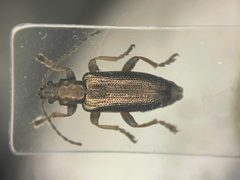
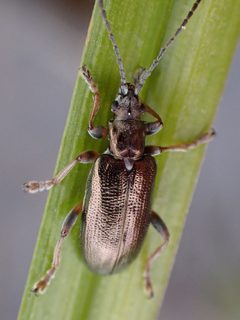
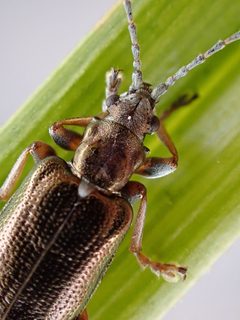
Plateumaris germari is an aquatic leaf beetle in the Chrysomelidae, Donaciinae. It occurs in western North America, with records extending from western Canada through the western United States. The is associated with wetland and riparian where emergent vegetation provides food and substrate for larval development. Like other members of the , it is believed to complete its in close association with aquatic or semi-aquatic plants.
Pronunciation
How to pronounce Plateumaris germari: /plæ.tɛuˈmaː.ris ɡɛrˈmaː.ri/
These audio files are automatically generated. While they are not always 100% accurate, they are a good starting point.
Identification
Members of the Plateumaris can be distinguished from related Donaciinae genera by their relatively robust body form and the structure of the . Specific identification of P. germari requires examination of male genitalia and comparison with closely related in the western North American fauna. The species may be separated from P. shoemakeri and other sympatric Plateumaris by subtle differences in elytral and coloration, though reliable identification typically requires dissection and reference to taxonomic keys.
Images
Habitat
Aquatic and semi-aquatic environments including marshes, ponds, lakeshores, and slow-moving streams. Associated with emergent vegetation such as sedges, rushes, and other wetland plants that serve as larval .
Distribution
Western North America. Documented from Alberta, British Columbia, and Labrador in Canada, with range extending southward through the western United States.
Similar Taxa
- Plateumaris shoemakeriOverlapping distribution in western North America; requires genitalic examination for reliable separation
- Donacia speciesSympatric aquatic leaf beetles in the same ; Donacia typically has more elongate body form and different antennal structure
More Details
Taxonomic authority note
The authority is sometimes cited as Mannerheim, 1843, though some sources may list alternative dates or authorship variations.