
Plateumaris frosti
(Schaeffer, 1925)
Frost's reed beetle
Plateumaris frosti is a of aquatic leaf beetle in the Donaciinae, commonly known as Frost's reed . It is distributed across North America with records from Canada (Alberta, British Columbia, Manitoba) and the United States. Like other members of the Plateumaris, it is associated with wetland and riparian . The species was described by C. Schaeffer in 1925.
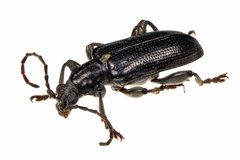
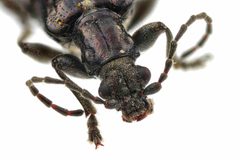
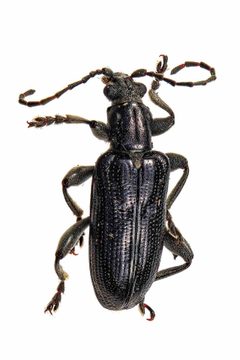
Pronunciation
How to pronounce Plateumaris frosti: /plæˈtjuːˌmɑːrɪs ˈfrɒstiː/
These audio files are automatically generated. While they are not always 100% accurate, they are a good starting point.
Images
Habitat
Aquatic and semi-aquatic environments; associated with emergent vegetation in wetlands, marshes, and along shorelines of lakes and slow-moving waters. Members of the Plateumaris are typically found on aquatic plants, particularly sedges and rushes ( Cyperaceae and Juncaceae).
Distribution
North America. Documented from Canadian provinces: Alberta, British Columbia, and Manitoba. Also present in the United States. The has a transcontinental distribution across northern and western portions of the continent.
Diet
Larvae are aquatic and feed internally on submerged portions of aquatic plants, particularly roots and rhizomes. feed on leaves and stems of emergent aquatic vegetation.
Host Associations
- Cyperaceae - larval food plantsedges; typical for
- Juncaceae - larval food plantrushes; typical for
Life Cycle
Typical of aquatic leaf beetles in Donaciinae: laid on or near aquatic vegetation; larvae are aquatic, living in submerged plant tissues or in the substrate near roots; occurs in an air-filled cocoon attached to aquatic plants; are capable of and disperse to new .
Behavior
are active fliers and can be found on emergent vegetation during warm periods. When disturbed, they may drop into water and swim or dive to escape. They are capable of remaining submerged by carrying air bubbles beneath the .
Ecological Role
Herbivore in freshwater wetland ; contributes to nutrient cycling through consumption and processing of aquatic plant material. Serves as prey for aquatic and semi-aquatic including fish, birds, and other .
Similar Taxa
- Plateumaris shoemakeriOverlapping distribution in North America; similar preferences and ; requires examination of male genitalia or other subtle characters for definitive separation
- Plateumaris pusillaSympatric in parts of range; similar size and coloration; distinguished by details of pronotal and elytral
- Donacia speciesRelated in same ; similar aquatic habits and appearance; Donacia typically has more pronounced metallic coloration and different antennal proportions
More Details
Taxonomic Note
The Plateumaris was historically treated as a subgenus of Donacia but is now recognized as a distinct genus based on morphological and molecular evidence. Plateumaris frosti is one of approximately 40 in the genus, most of which are Holarctic in distribution.
Conservation Status
Not formally assessed by IUCN. Wetland loss and degradation may pose threats to local , but the appears to maintain broad distribution across northern North America.
Sources and further reading
- BugGuide
- Wikipedia
- GBIF taxonomy match
- iNaturalist taxon
- NCBI Taxonomy
- Don't get bogged down with peat... - Buglife Blog - Buglife
- Corals’ Boldest Cousins: UH Scientists Discover Marine Creatures Bending the Laws of Evolution
- Conopidae | Beetles In The Bush
- fire | Beetles In The Bush
- Long Weekend Bug Collecting Trip! | Beetles In The Bush