
Donacia dissimilis
Schaeffer, 1925
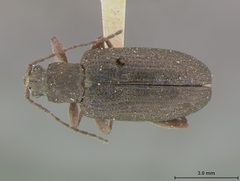
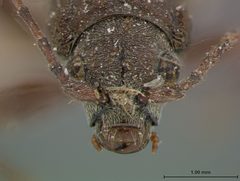
Donacia dissimilis is a of leaf beetle in the Chrysomelidae, Donaciinae. Like other members of its , it is an aquatic or semi-aquatic associated with freshwater . The species was described by Schaeffer in 1925 and is known from North America.
Pronunciation
How to pronounce Donacia dissimilis: /dɔˈna.t͡ʃi.a dɪsˈsɪ.mɪ.lɪs/
These audio files are automatically generated. While they are not always 100% accurate, they are a good starting point.
Identification
Members of the Donacia can be recognized by their elongated, somewhat flattened bodies and that are notably long, often exceeding body length. They possess enlarged hind adapted for swimming. Specific diagnostic features for D. dissimilis relative to are not documented in available sources.
Images
Habitat
Aquatic or semi-aquatic freshwater environments, typically associated with emergent vegetation in ponds, lakes, or slow-moving waters. Specific microhabitat preferences for D. dissimilis are not documented.
Distribution
North America. Specific range details within this region are not documented in available sources.
Diet
Larvae feed on submerged portions of aquatic plants, particularly roots and rhizomes. feed on leaves and stems of emergent aquatic vegetation.
Host Associations
- Aquatic plants (various emergent and submerged species) - larval food sourceSpecific plants for D. dissimilis are not documented; this reflects the general of the Donacia
Life Cycle
Complete with , larval, pupal, and stages. Larvae are aquatic and typically pupate in cocoons attached to submerged vegetation or roots. Specific details for D. dissimilis are not documented.
Behavior
are capable swimmers using their modified hind legs. They are often found on emergent vegetation where they feed and mate. Larvae remain submerged, feeding on plant roots.
Ecological Role
Herbivore in freshwater ; larvae and contribute to nutrient cycling through consumption of aquatic vegetation. May serve as prey for fish and other aquatic .
Human Relevance
Minor potential as a pest of aquatic crops or ornamental water plants, though no specific economic impacts documented for this . Like other Donacia species, may be indicators of wetland health.
Similar Taxa
- Donacia species share similar aquatic habits, body form, and use. Identification to level requires examination of subtle morphological characters including antennal proportions, body proportions, and male genitalia.
- Plateumaris speciesRelated in Donaciinae with similar aquatic and appearance; distinguished by differences in antennal structure and body proportions.
More Details
Taxonomic note
The specific epithet 'dissimilis' means 'unlike' or 'different' in Latin, presumably referring to differences from related noted by the original describer Schaeffer (1925).