
Neochlamisus eubati
(W.J.Brown, 1943)
Blackberry Case-bearing Leaf Beetle, warty leaf beetle
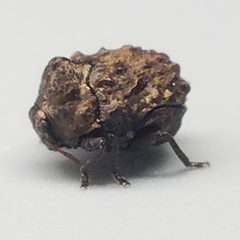
Neochlamisus eubati is a of case-bearing leaf beetle in the tribe Chlamisini, commonly known as warty leaf beetles. are small beetles, typically 3–4 mm in length, with a compact body form adapted for . The species is known from Central America and North America, with records extending into Alberta, Canada. Like other members of the , larvae construct protective cases from fecal material and .
Pronunciation
How to pronounce Neochlamisus eubati: /niːoʊˈklæmɪsʊs juːˈbeɪtaɪ/
These audio files are automatically generated. While they are not always 100% accurate, they are a good starting point.
Identification
Distinguished from similar small beetles by the combination of: compact warty body form; ability to retract all appendages completely into body grooves; small size (3–4 mm); and association with plants in the Rubus. Differentiation from other Neochlamisus requires examination of host plant association and subtle morphological characters. The genus Neochlamisus is distinguished from Exema by generally larger size (3–4 mm vs. 2–3 mm) and specific host plant associations.
Images
Habitat
Associated with vegetation in woodland edges and areas supporting plants. are found on foliage of Rubus .
Distribution
Recorded from Central America and North America, with specific distribution records from Middle America, North America, and Alberta, Canada.
Diet
feed on foliage of Rubus , particularly blackberry. Larval feeding habits presumed similar to but not directly documented for this species.
Host Associations
- Rubus - primary feeding and presumably larval development; specific epithet 'eubati' references this association
Life Cycle
are equipped with a fecal cap that serves as starting material for the larval case. Larvae are case-bearing, constructing and living within portable cases made from fecal material and . presumably occurs within the case, as in related .
Behavior
exhibit (death-feigning) combined with appendage retraction when disturbed, causing the to resemble caterpillar and potentially roll off the leaf to escape . This represents a sophisticated form of rather than chemical defense.
Ecological Role
Herbivore on Rubus foliage; contributes to nutrient cycling through herbivory. Serves as occasional prey for predatory , including Cerceris fumipennis (recorded as non-buprestid ).
Human Relevance
Minor economic relevance as a foliage feeder on blackberry (Rubus); reflects this association. Occasionally encountered in biosurveillance contexts due to by Cerceris .
Similar Taxa
- Neochlamisus plataniSimilar size and appearance; distinguished by bright coppery coloration and association with Platanus occidentalis (eastern sycamore) rather than Rubus
- Neochlamisus bebbianaSimilar ; associated with different plants and distinguished by subtle morphological differences
- Exema spp.Smaller size (2–3 mm vs. 3–4 mm); different plant associations (often Asteraceae); similar -mimicry and case-bearing larval habit
More Details
Frass-mimicry specialization
The Chlamisini, including N. eubati, represent an extreme specialization in : the 's resemblance to caterpillar extends to size, shape, texture, color, and behavioral retraction of all visible appendages. This mimicry is so effective that observers frequently mistake living beetles for inanimate debris.
Predation by Cerceris fumipennis
While Cerceris fumipennis is a documented of jewel beetles (Buprestidae), rare instances of Neochlamisus have been recorded. One observation in Missouri documented 11 N. platani (identified by bright coppery coloration) around a C. fumipennis nest, with 7 additional beetles cached underground—representing an exceptional non-buprestid prey record.