
Exema neglecta
Blatchley, 1920
warty leaf beetle
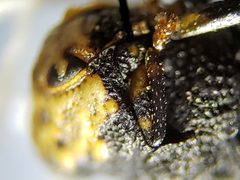
Exema neglecta is a of warty leaf beetle in the tribe Chlamisini, Cryptocephalinae. are small, measuring approximately 2–3 mm in length. The species exhibits remarkable -mimicry, resembling caterpillar droppings in size, shape, texture, and coloration. When disturbed, the retracts its , legs, and into precisely matched grooves, completing the illusion of inanimate debris. This species is found in North America.
Pronunciation
How to pronounce Exema neglecta: //ɛkˈsɛ.mə nɛˈɡlɛk.ta//
These audio files are automatically generated. While they are not always 100% accurate, they are a good starting point.
Identification
Members of the Exema can be distinguished from the similar genus Neochlamisus by their smaller size (2–3 mm versus 3–4 mm in Neochlamisus). Within Exema, identification requires examination of subtle morphological characters; E. neglecta was described by Blatchley in 1920 based on specimens from Indiana. The 's compact, irregularly rounded body with warty texture and dull coloration mimics caterpillar . When disturbed, the appendages fold into grooves on the surface, leaving no visible indication of insect anatomy.
Images
Distribution
North America. Specific locality records include Indiana, the type locality described by Blatchley (1920).
Behavior
When disturbed, retract the and fold legs and into precisely matched grooves on the body, eliminating any visible indication of insect anatomy. This , combined with the 's physical appearance, creates convincing mimicry of caterpillar . If disturbance is sufficient to cause complete retraction of appendages, the beetle will likely roll off the leaf and fall away. Larvae are case-bearing, constructing protective cases from their own mixed with .
Similar Taxa
- NeochlamisusSimilar -mimicry and body form, but larger (3–4 mm versus 2–3 mm) and associated with woody such as oak (Quercus) rather than herbaceous plants.
- Other Exema speciesRequire examination of subtle morphological characters for differentiation; E. neglecta distinguished by features described in Blatchley (1920) original description.
Sources and further reading
- BugGuide
- Wikipedia
- GBIF taxonomy match
- iNaturalist taxon
- NCBI Taxonomy
- Chrysomelidae | Beetles In The Bush | Page 4
- Spring beetles on Coreopsis flowers | Beetles In The Bush
- Rare, protected orchid thrives in a military base in Corsica
- A flower visiting jewel beetle that is not an Acmaeodera | Beetles In The Bush