
Chrysomela confluens
(Rogers, 1856)
Chrysomela confluens is a leaf beetle in the Chrysomelidae. Research demonstrates that this exhibits dramatically elevated abundance in plant hybrid zones between cottonwood species (Populus), where staggered leaf phenologies create 'phenological sinks' that concentrate . The species depends on newly flushed leaves for optimal growth and , and its distribution is strongly tied to plant rather than host plant alone.
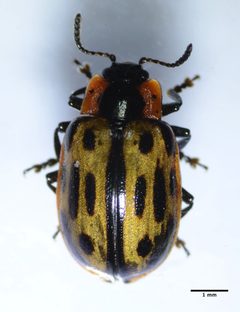
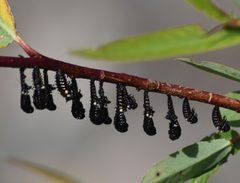
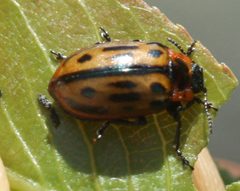
Pronunciation
How to pronounce Chrysomela confluens: //ˌkraɪsoʊˈmiːlə ˌkɒnˈfluːɛns//
These audio files are automatically generated. While they are not always 100% accurate, they are a good starting point.
Identification
Chrysomela confluens belongs to the Chrysomela, which contains leaf-feeding beetles generally associated with Salicaceae (willows and poplars). Within this genus, C. confluens is distinguished by its strong association with Populus hybrid zones and its dependence on newly flushed foliage. Specific diagnostic morphological features distinguishing C. confluens from are not documented in available sources.
Images
Habitat
Associated with Populus (poplar/cottonwood) stands, particularly in natural hybrid zones between cottonwood where staggered leaf phenologies occur. The hybrid zone represents less than 3% of the cottonwood but harbors 94% of the C. confluens population.
Distribution
North America; recorded from British Columbia, Canada and presumably distributed more broadly across the range of its Populus plants.
Seasonality
Activity tied to leaf flush of Populus; early leaf flush in hybrid zones provides the first food source in spring, with staggered phenologies allowing extended availability of suitable foliage through the growing season.
Diet
Folivory on Populus (poplar/cottonwood) leaves; specifically dependent on newly flushed leaves for optimal growth and .
Host Associations
- Populus - primary plantSpecifically associated with hybrid zones between cottonwood ; leaf flush is critical to suitability
Behavior
females exhibit -shifting within hybrid zones, moving to newly flushed Fremont cottonwood trees as foliage of sympatric hybrid and narrowleaf trees declines in quality. This behavioral plasticity can result in a 600% increase in compared to non-shifting females.
Ecological Role
Herbivore that contributes to elevated herbivory pressure in plant hybrid zones; the demonstrates how phenological sinks can concentrate herbivore and chronically maintain high herbivory rates. Movement from hybrid zones reduces , suggesting into adjacent pure zones is hindered.
Similar Taxa
- Other Chrysomela species share association with Salicaceae, but C. confluens is specifically distinguished by its concentration in Populus hybrid zones and dependence on phenological sinks
- Chrysomela aeneicollisAnother montane leaf beetle in the same studied for , but associated with Salix (willow) in the Sierra Nevada rather than Populus hybrid zones
Sources and further reading
- BugGuide
- Wikipedia
- GBIF taxonomy match
- iNaturalist taxon
- NCBI Taxonomy
- Tracking a Montane Leaf Beetle | Bug Squad
- Who's Speaking at UC Davis Entomology Fall Seminars? | Bug Squad
- Beetle botanists | Beetles In The Bush
- Harvestmen Use Glue to Capture Prey
- Arctic Research | Blog
- August | 2015 | Beetles In The Bush
- Elevated Herbivory in Plant Hybrid Zones: Chrysomela Confluens, Populus and Phenological Sinks