
Hemisphaerota
Chevrolat in Dejean, 1836
Species Guides
1- Hemisphaerota cyanea(palmetto tortoise beetle)
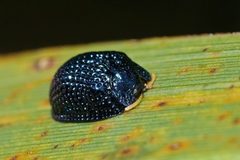
Hemisphaerota is a of tortoise beetles in the Cassidinae, containing approximately 10 described distributed across the circum-Caribbean region. The genus is characterized by hemispherical body shape and specialized tarsal structures for adhesion to plant surfaces. The best-studied species, H. cyanea (palmetto ), exhibits remarkable defensive adaptations including adhesive tarsal pads that secrete oil when threatened, and larvae that construct protective fecal thatches.
Pronunciation
How to pronounce Hemisphaerota: //hɛˌmɪs.fæˈɪrə.tə//
These audio files are automatically generated. While they are not always 100% accurate, they are a good starting point.
Identification
The hemispherical body shape distinguishes Hemisphaerota from most other leaf beetles. Within Cassidinae, the combination of hemispherical form and palm-feeding helps distinguish this . H. cyanea specifically is identified by its dark blue coloration with yellow and occurrence on saw palmetto and other palms in the southeastern United States.
Images
Habitat
Associated with palm foliage. H. cyanea occurs in sand scrub , pine scrub, and areas with saw palmetto (Serenoa repens) and other native and introduced palms.
Distribution
Circum-Caribbean distribution. H. cyanea is found in the deep southeastern United States (Florida and adjacent areas), with the ranging more broadly throughout the Caribbean region.
Diet
Feeding on palm foliage. H. cyanea scarifies the leaf of saw palmetto and other palms, leaving trough-like feeding marks.
Host Associations
- Serenoa repens - primary plantsaw palmetto
- palms (Arecaceae) - plant native and introduced palm
Life Cycle
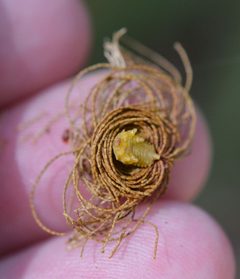
hatch into larvae that immediately begin constructing a protective fecal thatch. The thatch is maintained and enlarged through larval development rather than being discarded at molting. occurs beneath the thatch. The thatch consists of long filamentous fecal strands arranged in a shingle-like pattern covering the surface.
Behavior
clamp tightly against leaves when threatened, using specially modified with adhesive pads. When disturbed, adults secrete an oil that strengthens adhesion of the tarsal pads, making them extremely difficult to pry from the leaf surface. Larvae actively maintain and repair their fecal thatch when damaged. Both adults and larvae exhibit defensive against .
Ecological Role
Herbivore on palms; serves as prey for various including coccinellid beetles, pentatomid , and carabid beetles. The specialized defensive adaptations of larvae and represent a coevolutionary response to pressure.
Similar Taxa
- Other Cassidinae tortoise beetlesHemisphaerota is distinguished by its hemispherical shape and palm-specific associations; other tortoise beetles typically feed on different host plants and lack the extreme tarsal specializations for adhesion.
- Scale insects may be mistaken for scale insects due to their appearance on leaves; however, Hemisphaerota are mobile beetles with visible and legs when not in defensive posture.
More Details
Fecal thatch defense
The larval fecal thatch of H. cyanea represents a novel form of defensive architecture among chrysomelid beetles. The thatch is effective against most including Cycloneda sanguinea (coccinellid larva) and Stiretrus anchorago (pentatomid ), but not against the carabid beetle Calleida viridipennis which has evolved stereotyped attack to breach the thatch.
Tarsal adhesion mechanism
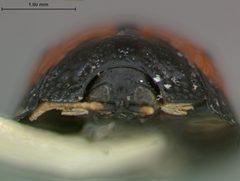
The tarsal pads normally have only a few contact points with the leaf surface, but when threatened the clamps all thousands of bristle-tipped pads against the leaf and secretes an oil that dramatically increases adhesive strength.