
Pachymerus nucleorum
(Fabricius, 1792)
Coconut Borer
Pachymerus nucleorum is a bruchine seed beetle that develops within palm seeds, primarily attacking in the Arecaceae . Larvae feed on endosperm inside hard-shelled fruits, with documented including babassu palm (Attalea/Orbinya spp.), licuri palm (Syagrus coronata), and palm (Syagrus romanzoffiana). The species occurs in Brazilian biomes including Caatinga and Atlantic Forest remnants, where it functions as a primary seed . are subject to by braconid wasps, particularly Heterospilus prosopodis. The species has been observed in both natural vegetation and managed , with parasitism rates varying by habitat complexity.
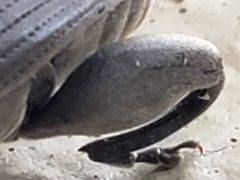
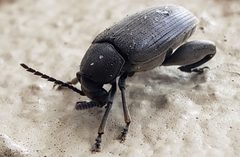

Pronunciation
How to pronounce Pachymerus nucleorum: //ˌpækɪˈmɛrəs ˌnjuːklɪˈɔːrəm//
These audio files are automatically generated. While they are not always 100% accurate, they are a good starting point.
Identification
Pachymerus nucleorum can be distinguished from by association and geographic range, though detailed morphological diagnostic features require literature. It co-occurs with Pachymerus cardo on shared host palms; -level identification relies on examination of genitalia or larval molecular markers. The Pachymerus is characterized by robust body form typical of bruchine beetles adapted for seed boring.
Images
Habitat
Natural Caatinga vegetation, Atlantic Forest remnants, and managed pastures in Brazilian semi-arid regions; varzea zones and river valleys. Associated with palm individuals, particularly Syagrus coronata in Caatinga and Syagrus romanzoffiana in Atlantic Forest areas.
Distribution
Brazil, specifically recorded in Alagoas (northeastern Brazil) and broadly within the Caatinga biome; associated with palm distributions in Brazilian semi-arid regions.
Diet
Larvae feed exclusively on palm seed endosperm; documented include Syagrus coronata (licuri palm), Syagrus romanzoffiana ( palm), and Attalea/Orbinya spp. (babassu palm). Amylolytic in larval guts indicate for starch digestion.
Host Associations
- Syagrus coronata (Martius) Beccari - plant - larval developmentlicuri palm; primary in Caatinga
- Syagrus romanzoffiana (Cham.) Glassman - plant - larval development palm; in Atlantic Forest areas
- Attalea/Orbinya spp. - plant - larval developmentbabassu palm; principal in varzea zones and river valleys
- Heterospilus prosopodis - braconid ; higher rates in natural vs. managed
- Heterospilus sp. - braconid ; observed in Alagoas
Life Cycle
Females oviposit on the surface of fallen palm fruits. Larvae penetrate the hard drupe endocarp and complete development feeding on seed endosperm. Larval guts contain amylolytic active at 50°C, with activity stimulated by calcium and sodium chloride. emerge from seeds. attack larvae through the fruit surface.
Behavior
Oviposition occurs on fallen palm fruits. Larvae feed protected within hard endocarp, though still vulnerable to skilled . Abundance does not differ significantly between natural and managed , though susceptibility varies with habitat plant diversity.
Ecological Role
Primary seed of multiple palm , affecting plant recruitment and . Serves as for (Heterospilus spp.) and prey for predators and microhymenopterans. Functions as a tritrophic interaction node linking palm to higher consumer levels.
Human Relevance
Minor economic relevance; may affect ornamental palm plantings (e.g., Syagrus coronata in urban landscaping). "Coconut Borer" suggests potential association with coconut, though primary documented are native Brazilian palms.
Similar Taxa
- Pachymerus cardoCongeneric sharing plant Syagrus romanzoffiana; co-occurs in same palm and subject to similar complexes. Distinguished by morphological features and potentially host range subtleties.
Sources and further reading
- BugGuide
- iNaturalist taxon
- Interação tritrófica entre Pachymerus cardo (Fahraeus), Pachymerus nucleorum (Fabricius) (Coleoptera, Chrysomelidae, Bruchinae) e seus parasitoides em populações de Syagrus romanzoffiana (Cham.) Glassman (Arecaceae)
- Natural Vs Managed Habitat: Effect Over the Seed-Predator Pachymerus nucleorum and Its Natural Enemies
- Partial characterization of amylasic activity present in the intestine of Pachymerus nucleorum larvae (Fabricius, 1792)
- Record of tritrophic relationship between Syagrus coronata (Martius) Beccari (Arecaceae), Pachymerus nucleorum Fabricius (Coleoptera: Chrysomelidae: Bruchinae) and Heterospilus sp. (Hymenoptera: Braconidae) in the State of Alagoas, northeastern Brazil