
Althaeus hibisci
(Olivier, 1795)
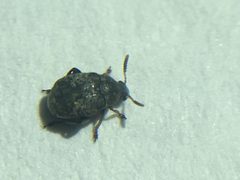
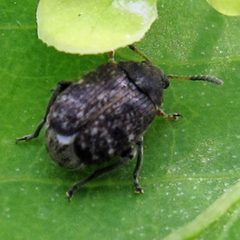
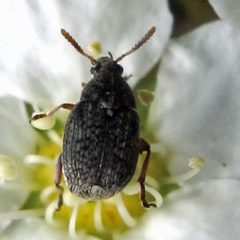
Althaeus hibisci is a seed weevil in the leaf beetle Chrysomelidae, Bruchinae. measure 1.5–2.5 mm in length. The is found in North America and is associated with hibiscus plants. It is among the very small insects that are rarely photographed due to the technical challenges of imaging at high magnification.
Pronunciation
How to pronounce Althaeus hibisci: //ælˈθiːəs hɪˈbɪskaɪ//
These audio files are automatically generated. While they are not always 100% accurate, they are a good starting point.
Identification
Distinguished from other Althaeus by association and subtle morphological characters; A. folkertsi is a closely related species that also occurs on hibiscus and is difficult to separate without close examination. The Althaeus is characterized by its association with Malvaceae host plants. Identification to species level typically requires examination of genitalia or host plant records.
Images
Appearance
are minute beetles, 1.5–2.5 mm in length. As a member of Bruchinae, the body form is compact and rounded, typical of seed weevils. The small size makes field observation and photography difficult without specialized macro equipment.
Habitat
Associated with hibiscus plants (Hibiscus spp.), including Hibiscus moscheutos lasiocarpus. Occurs in where plants grow, including wetlands and disturbed areas with mallow vegetation.
Distribution
North America. Specific records include Missouri (Route 66 State Park, St. Louis County).
Diet
Larval development occurs within seeds of hibiscus plants. likely feed on pollen or plant tissues of the , though this has not been explicitly documented.
Host Associations
- Hibiscus moscheutos lasiocarpus - larval development in seeds
Life Cycle
Complete typical of Coleoptera. Larvae develop as seed borers within hibiscus seeds. Specific details of placement, larval instars, and have not been documented.
Behavior
have been observed on hibiscus leaves and flowers. The small size and cryptic habits make detection difficult without targeted searching on plants.
Ecological Role
Seed of hibiscus plants. As a specialized herbivore, likely contributes to regulation of plant and serves as prey for predators.
Human Relevance
No documented economic importance. Occasionally encountered by entomologists and macrophotographers as a subject for high-magnification photography due to its extremely small size.
Similar Taxa
- Althaeus folkertsiClosely related also associated with hibiscus; difficult to distinguish without detailed examination
- Other BruchinaeSimilar body form and seed-feeding habit, but Althaeus is distinguished by association with Malvaceae
More Details
Photography note
This has been photographed at 8X magnification using stacked extension tubes with a Canon MP-E 65mm macro lens, demonstrating the technical challenges of imaging such minute insects in the field. The subject-to-lens distance at this magnification is extremely small, complicating lighting and requiring specialized bracing techniques.