
Althaeus
Bridwell, 1946
velvetleaf seed beetle
Species Guides
2- Althaeus folkertsi(velvetleaf seed beetle)
- Althaeus hibisci
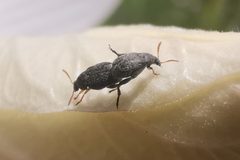
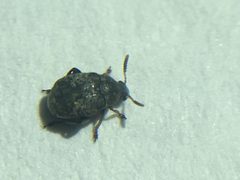
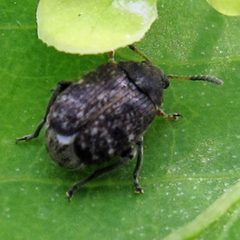
Althaeus is a of seed weevils in the Bruchinae, Chrysomelidae. The genus contains at least three described : A. folkertsi (velvetleaf ), A. hibisci, and A. steneri. are extremely small, measuring only 1.5–2.5 mm in length. Species in this genus are associated with mallow family plants (Malvaceae), particularly Hibiscus species.
Pronunciation
How to pronounce Althaeus: //ælˈθiːəs//
These audio files are automatically generated. While they are not always 100% accurate, they are a good starting point.
Identification
Identification to requires examination of microscopic characters, particularly male genitalia. can be distinguished from other bruchine by a combination of antennal structure, pronotal shape, and elytral . A. folkertsi and A. steneri are closely related and were described together in 1989; A. hibisci is the oldest described species (1795).
Images
Habitat
Associated with plants in the mallow (Malvaceae), particularly Hibiscus . Found in where host plants occur, including disturbed areas, wetlands, and riparian zones.
Distribution
North America. Specific distribution varies by : A. hibisci has been recorded from Missouri and presumably occurs more broadly; A. folkertsi and A. steneri distributions are less well documented but likely correspond to ranges of their respective plants.
Seasonality
activity period appears to correspond with flowering and seed set of plants. Specific data are limited.
Diet
Larvae develop within seeds of Malvaceae, particularly Hibiscus . have been observed feeding on pollen of plants.
Host Associations
- Hibiscus moscheutos lasiocarpus - larval Confirmed for A. hibisci or A. folkertsi
- Abutilon pauciflorum - pollen feedingRelated in Malvaceae; actual Althaeus association inferred from context but not explicitly confirmed
Life Cycle
Typical bruchine : laid on developing seeds or pods; larvae bore into seeds and feed internally, consuming the seed contents; occurs within the seed; emerge through exit holes. Multiple per year likely in warmer climates.
Behavior
are cryptic and rarely observed due to extremely small size. When disturbed, adults may drop from plants. Larval development is entirely endophytic within seeds.
Ecological Role
Seed on Malvaceae. impacts on plant recruitment are unknown but likely minimal given the small number of seeds affected relative to total seed production.
Human Relevance
A. folkertsi (velvetleaf ) has been investigated as a potential agent for velvetleaf (Abutilon theophrasti), a major agricultural weed. The is not commercially available and its efficacy as a biocontrol agent remains under study.
Similar Taxa
- Other Bruchinae generaAlthaeus is distinguished by association with Malvaceae and specific morphological characters of the and pronotum. Many bruchines are seed feeders on legumes (Fabaceae) rather than mallows.
- AcanthoscelidesA large bruchine also containing small , but Acanthoscelides species typically have different antennal structure and are primarily associated with Fabaceae.
More Details
Taxonomic History
The was established by Bridwell in 1946. The three currently recognized were described across a wide time span: A. hibisci by Olivier in 1795, and A. folkertsi and A. steneri by Kingsolver in 1989. The genus has received limited taxonomic attention since its establishment.
Photographic Documentation
High-magnification photography (8X) has been used to document living in the field, demonstrating the feasibility of extreme macrophotography for documenting these minute beetles in situ.