
Tetropium parallelum
Casey, 1891
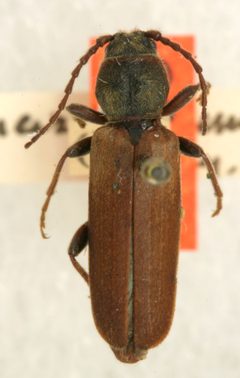
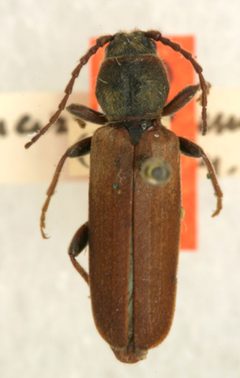
Tetropium parallelum is a of longhorned beetle in the Cerambycidae, described by Casey in 1891. It belongs to the Tetropium, which comprises woodboring beetles primarily associated with coniferous trees. The species is recorded from western North America, including Alberta, Canada and the United States. Like other members of its genus, it likely develops in dead or dying conifer wood, though specific biological details remain poorly documented.

Pronunciation
How to pronounce Tetropium parallelum: //tɛˈtroʊpiəm ˌpærəˈlɛləm//
These audio files are automatically generated. While they are not always 100% accurate, they are a good starting point.
Identification
Tetropium parallelum can be distinguished from other Tetropium by the parallel-sided that give the species its name. Members of the Tetropium are generally characterized by their elongate, parallel-sided body form, relatively short (typically not exceeding body length in females), and pronotum with distinct lateral or teeth. Specific identification requires examination of genitalic structures and comparison with type material.
Images
Distribution
Recorded from Alberta, Canada and the United States. The precise range within the United States is not well documented in available sources.
Similar Taxa
- Tetropium cinnamopterumSimilar conifer-associated Tetropium with overlapping western North American distribution; distinguished by differences in elytral coloration and body proportions.
- Tetropium schwarzianumAnother western North American Tetropium ; requires close examination of genitalia and elytral for definitive separation.
More Details
Taxonomic note
The was described by Thomas Lincoln Casey in 1891, a prolific American coleopterist who described numerous Cerambycidae species. The specific epithet 'parallelum' refers to the parallel-sided form of the , a characteristic feature of this species.
Data deficiency
Tetropium parallelum is poorly represented in collections and literature. Only a single observation is recorded in iNaturalist, and detailed biological information appears to be lacking from major entomological databases.