
Meroscelisini
Genus Guides
1Meroscelisini is a tribe of longhorn beetles within the Prioninae of the Cerambycidae. These beetles are characterized by their robust bodies and relatively large size compared to other cerambycids. The tribe includes several distributed across multiple continents, with often associated with woody vegetation.
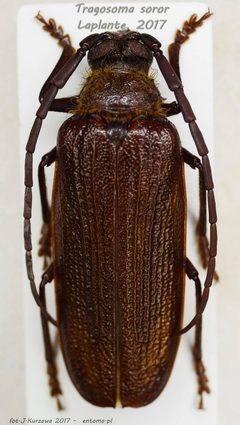
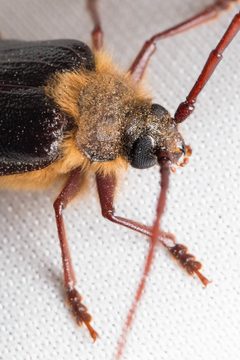
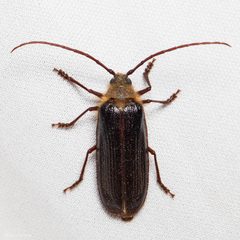
Pronunciation
How to pronounce Meroscelisini: //ˌmɛɹoʊˌsɛlɪˈsaɪniː//
These audio files are automatically generated. While they are not always 100% accurate, they are a good starting point.
Identification
Members of Meroscelisini can be distinguished from other Prioninae tribes by their robust, often cylindrical body form and that are typically shorter than the body length. The pronotum usually bears lateral or spines, and the are generally unpatterned or with simple punctation. They lack the extremely elongated antennae seen in many other cerambycid groups.
Images
Habitat
in this tribe are primarily associated with forested , particularly those containing hardwood trees. Larvae develop in dead or decaying wood of various tree species. are often found on or near their trees, particularly during the breeding season.
Distribution
The tribe has a wide distribution including parts of Africa, Asia, and the Americas. Individual within the tribe may have more restricted ranges. The 3762 iNaturalist observations suggest the group is moderately well-documented across its range.
Diet
Larvae feed on dead or decaying wood of hardwood trees, acting as wood decomposers. feeding habits are less documented but likely include bark, foliage, or other plant materials.
Life Cycle
Development occurs through complete with , larval, pupal, and stages. Larvae are wood-borers that tunnel through dead wood, requiring one to several years to complete development depending on and environmental conditions. typically occurs within the wood gallery.
Behavior
are generally or . They are relatively slow-moving beetles that rely on for defense. When disturbed, some may stridulate or adopt defensive postures.
Ecological Role
As larvae, members of this tribe contribute to nutrient cycling and wood decomposition in forest . They create galleries in dead wood that provide for other organisms and facilitate fungal .
Human Relevance
Some may occasionally damage timber or wooden structures, though they are generally not considered major economic pests. Their large size and distinctive appearance make them of interest to entomologists and collectors.
Similar Taxa
- PrioniniAnother tribe within Prioninae; Meroscelisini can be distinguished by generally shorter and different pronotal structure.
- MacrotominiAlso in Prioninae; Meroscelisini typically have more robust body proportions and different antennal .
More Details
Taxonomic Note
The tribal classification within Prioninae has undergone revision, and the composition of Meroscelisini may vary between authorities. Some formerly placed here have been moved to other tribes based on phylogenetic studies.