
Cortodera
Mulsant, 1863
Species Guides
8- Cortodera coniferae
- Cortodera cubitalis
- Cortodera falsa(flower longhorn)
- Cortodera impunctata
- Cortodera longicornis(flower longhorn)
- Cortodera militaris(flower longhorn)
- Cortodera stolida(flower longhorn)
- Cortodera subpilosa(western mountain flower longhorn)
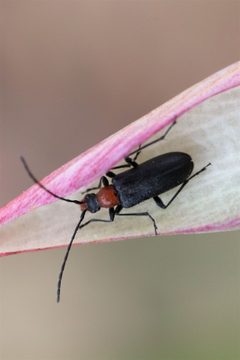
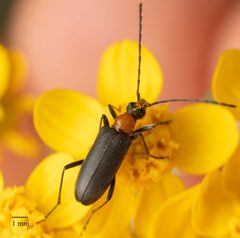
Cortodera is a of longhorn beetles in the Cerambycidae, Lepturinae, tribe Rhagiini. The genus contains approximately 21 described , primarily distributed in North America. These beetles are associated with coniferous and mixed forest . The genus was established by Mulsant in 1863.

Pronunciation
How to pronounce Cortodera: //kɔːˈtoʊdəˌɹæ//
These audio files are automatically generated. While they are not always 100% accurate, they are a good starting point.
Identification
Members of Cortodera can be distinguished from related Rhagiini by a combination of characters including body form, antennal structure, and pronotal features. Specific identification to level requires examination of subtle morphological details such as elytral coloration patterns, punctation , and male genitalia. The genus is part of the flower-visiting longhorn beetle within Lepturinae.
Images
Habitat
within Cortodera are primarily associated with coniferous forests. Several species have specific associations with conifer , as indicated by epithets such as coniferae.
Distribution
North America, with records from Canada (including Northwest Territories) and the United States. Distribution records indicate presence in Norway (NO) and Sweden (SE), though these may represent introductions or misidentifications requiring verification.
Host Associations
- conifers - associated withseveral epithets and historical records indicate conifer association
Similar Taxa
- other Rhagiini generashare Lepturinae and tribe Rhagiini; distinguished by morphological characters of body form, antennal structure, and pronotal features
- other Lepturinae generashare flower-visiting and general body plan; separated by tribal and generic-level morphological characters