
Grammoptera exigua
(Newman, 1841)
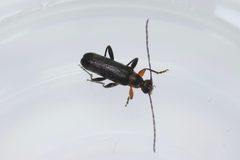
Grammoptera exigua is a small flower longhorn beetle (Cerambycidae: Lepturinae) first described by Newman in 1841. It belongs to a of beetles commonly found on flowers, where feed on pollen. The occurs in eastern North America, with records from Ontario, Québec, and Manitoba in Canada. Like other Grammoptera species, it is associated with woody vegetation and is most often encountered on freshly cut logs or flowering plants.
Pronunciation
How to pronounce Grammoptera exigua: //ɡræmˈɒptərə ɛkˈsɪɡjuə//
These audio files are automatically generated. While they are not always 100% accurate, they are a good starting point.
Identification
Distinguished from other longhorn beetles by its small size, slender form, and flower-visiting rather than wood-boring habits. Separated from congeneric by subtle morphological differences in proportions and body proportions, though specific diagnostic characters for G. exigua require examination. The Grammoptera can be recognized among Lepturinae by the combination of small to moderate size, antennae, and frequent presence on flowers.
Images
Habitat
Associated with flowering vegetation and woody plants. occur on flowers where they feed on pollen. Larval development occurs in wood, though specific plant requirements are not well documented. Found in forested and semi-open where host plants and flowers are available.
Distribution
Eastern North America. Documented from Ontario, Québec, and Manitoba in Canada. Distribution in the United States not explicitly recorded in available sources but likely extends into adjacent northern states given Canadian records.
Seasonality
activity period not explicitly documented. Based on related in the , likely active from late spring through summer when flowers are abundant. The species has been recorded at blacklight traps, indicating or activity.
Diet
feed on pollen from flowers. Larval diet presumed to be wood, as in other Cerambycidae, though specific plants are not documented.
Host Associations
- Flowers (general) - feeding site visit flowers to feed on pollen; specific plant not documented
Life Cycle
Complete with , larva, pupa, and stages. Larvae develop in wood; details of development duration and specific wood substrates are not documented.
Behavior
are flower visitors, actively seeking pollen. Attracted to ultraviolet light sources, indicating or activity. Mating observed in related involves males seeking females on flowers or woody substrates.
Ecological Role
function as through pollen feeding on flowers. Larvae contribute to wood decomposition as secondary colonizers of dead or dying wood. Serves as prey for various including birds and predatory insects.
Human Relevance
No significant documented economic impact. Not considered a pest of living trees or timber. Potential incidental value as a in natural .
Similar Taxa
- Other Grammoptera speciesShare the same , flower-visiting , and general body form; require examination of proportions, body proportions, and male genitalia for definitive separation
- Other Lepturinae (flower longhorns)Similar ecological association with flowers and slender body form; distinguished by -level characters including antennal structure and body proportions
- Small Cerambycidae in other subfamiliesMay overlap in size; distinguished by Lepturinae characteristics including flower association and often more slender build compared to wood-boring cerambycids
More Details
Taxonomic stability
The has remained in the Grammoptera since description, with no recorded synonymies or transfers in major databases.
Collection records
GBIF records indicate presence in three Canadian provinces; iNaturalist shows limited observation data with only 6 records, suggesting it is infrequently encountered or underreported.
Research gaps
Basic biological information including larval plants, , and detailed distribution remain undocumented in the accessible literature.
Sources and further reading
- BugGuide
- Wikipedia
- GBIF taxonomy match
- iNaturalist taxon
- NCBI Taxonomy
- Catalogue of Life
- Oh, What a (Moth) Night! | Bug Squad
- Blacklighting at the Bohart: They Saw the Light | Bug Squad
- Bug Eric: Beetle Bonanza
- Quick Guide to Armyworms on Soybean | Beetles In The Bush
- leaf-footed bugs | Beetles In The Bush | Page 2
- The Marvelously Cryptic Dicerca lurida | Beetles In The Bush