
Etorofus subhamatus
(Randall, 1838)
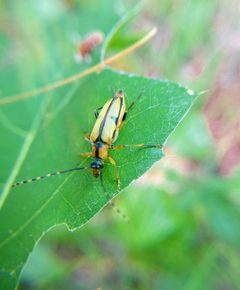
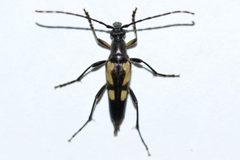
Etorofus subhamatus is a longhorn beetle ( Cerambycidae) in the Lepturinae, described by Randall in 1838. It belongs to the tribe Lepturini, a group commonly known as flower longhorns due to their frequent presence on blossoms. The is documented from numerous observations, indicating it is not uncommon within its range. Specific ecological details remain limited in the available literature.
Pronunciation
How to pronounce Etorofus subhamatus: /ˌɛtoʊˈroʊfəs ˌsʌbˈhæmətəs/
These audio files are automatically generated. While they are not always 100% accurate, they are a good starting point.
Identification
As a member of Lepturinae, Etorofus subhamatus likely exhibits the 's characteristic elongated, somewhat flattened body form and that are often shorter than the body. Within the Etorofus, are distinguished by features of the elytral , antennal structure, and male genitalia. Definitive identification to species requires examination of these morphological characters, particularly the shape of the elytral apex and the structure of the pronotum. It may be distinguished from similar flower longhorns in related genera (such as Strangalia and Typocerus) by the specific combination of antennomere proportions and elytral maculation pattern, though precise diagnostic features for this species are not well-documented in general sources.
Images
Distribution
Eastern North America. The Etorofus is primarily Nearctic in distribution, and records of E. subhamatus align with this pattern.
Similar Taxa
- Strangalia speciesOther Lepturinae with similar flower-visiting habits and elongated bodies; distinguished by antennal and genitalic characters
- Typocerus speciesNearctic Lepturini with overlapping distribution; differ in elytral pattern and antennal proportions
More Details
Taxonomic note
The Etorofus was historically treated as a subgenus of Strangalia, but is now recognized as distinct based on phylogenetic and morphological studies. This reclassification affects literature searches, with older sources potentially listing this as Strangalia subhamata.