
Desmocerini
Genus Guides
1- Desmocerus(Elderberry Borers)
Desmocerini is a tribe of longhorn beetles (Cerambycidae) within the Lepturinae. The tribe is best known for the Desmocerus, which contains large, strikingly colored beetles. Members of this tribe are associated with woody vegetation and have been documented in North America. The group is characterized by distinctive morphological features that separate it from related lepturine tribes.
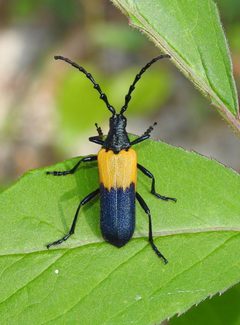
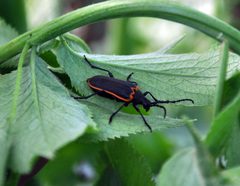
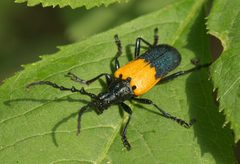
Pronunciation
How to pronounce Desmocerini: //dɛsˌmoʊsəˈraɪnaɪ//
These audio files are automatically generated. While they are not always 100% accurate, they are a good starting point.
Identification
Desmocerini can be distinguished from other Lepturinae tribes by the combination of large body size, often with metallic blue or green coloration, and that are shorter relative to body length than many other cerambycids. The pronotum tends to be broad and somewhat constricted at the base. Separation from the closely related tribe Rhagiini requires examination of tarsal structure and genitalia.
Images
Habitat
Associated with riparian and woodland where plants grow. Larval development occurs in living or recently dead woody stems and branches.
Distribution
Primarily distributed in North America, with records from Canada through the United States to Mexico. The Desmocerus has been documented from western and eastern North American regions.
Seasonality
are active during spring and summer months, with peak activity varying by latitude and elevation. period generally corresponds with flowering of plants.
Diet
Larvae feed internally on the pith and vascular tissues of living or dying stems of woody plants, particularly in the Cornaceae (dogwoods). have been observed feeding on pollen and nectar.
Host Associations
- Cornus - larval Primary larval ; larvae tunnel in stems of living dogwoods
Life Cycle
Complete . are laid on or near plants. Larvae bore into stems and undergo extended development, potentially requiring multiple years to mature. occurs within the gallery. emerge through exit holes.
Behavior
are and have been observed visiting flowers. Larvae are concealed feeders within stems.
Ecological Role
Larvae act as stem borers in woody plants, contributing to nutrient cycling and creating for other organisms in galleries. may function as during flower visitation.
Human Relevance
Some are considered ornamental due to their large size and bright metallic coloration. Occasionally encountered by gardeners and naturalists. Not known to be economically significant pests.
Similar Taxa
- RhagiiniOverlaps in Lepturinae; distinguished by tarsal formula and genitalic structure
- LepturiniRelated tribe in same ; generally smaller with different antennal proportions and associations
More Details
Taxonomic history
The tribal placement of Desmocerus has been revised historically, with some earlier treatments placing it in distinct . Current classification based on molecular and morphological data places it firmly within Lepturinae.
Conservation note
Some Desmocerus have restricted ranges and are associated with specific plant , potentially making them vulnerable to alteration.