
Desmiphora
Audinet-Serville, 1835
Species Guides
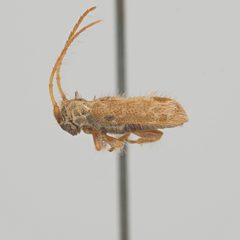
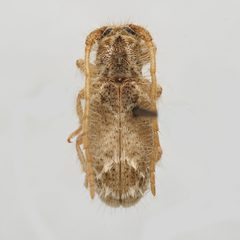
2Desmiphora is a of longhorn beetles (Cerambycidae: Lamiinae) comprising approximately 50 distributed across the New World tropics and subtropics. The genus is characterized by distinctive fasciculate tufts (pencils) of erect or suberect hairs on the body. Most species occur in Brazil, with some extending northward to southern Texas. The genus was established by Audinet-Serville in 1835 and includes two subgenera: Antenniphora and Desmiphora.
Pronunciation
How to pronounce Desmiphora: //dɛsˈmɪfɔːrə//
These audio files are automatically generated. While they are not always 100% accurate, they are a good starting point.
Identification
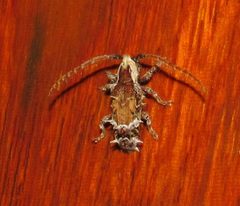
The combination of fasciculate hair tufts (pencils) on the body and placement in Lamiinae distinguishes Desmiphora from most other cerambycid . Within Desmiphorini, the dense hair tufts are diagnostic. -level identification requires examination of specific arrangements of hair tufts, elytral color patterns, and antennal structure. Desmiphora hirticollis is recognizable by its and small black pencils just before the elytral apices. The genus superficially resembles some hairy caterpillars due to its penicillate appearance, which may contribute to its or mimicry.
Images
Appearance
Medium-sized longhorn beetles with cylindrical bodies. The defining feature is the presence of fasciculate tufts (pencils) of erect or suberect hairs, particularly noticeable on the and pronotum. typically dark ( to black) with variable patterns of lighter markings. usually shorter than body length. Body shape compact, with elytra tapering slightly toward the apices. vary in the , length, and distribution of hair tufts.
Habitat
Found in forested , particularly in association with dead or freshly cut wood. are often encountered on log piles, cut timber, and standing trees. The shows association with specific plants in the Boraginaceae, including Cordia and Patagonula . Habitat ranges from moist Atlantic Forest and Selva Paranaense to drier Chaco woodlands.
Distribution
Exclusively New World. Center of diversity in Brazil, with distributed throughout South America, Central America, Mexico, and northward to southern Texas (USA). Specific species have varying ranges: D. hirticollis extends from Texas to Bolivia and Argentina; D. elegantula and D. hirticollis reach the northern limits of the in Texas.
Host Associations
- Cordia - larval reared from Cordia eleagnoides; adults frequently collected on Cordia spp. in Texas
- Patagonula americana - probable larval Multiple found exclusively on freshly cut guayaibi logs in Corrientes, Argentina
- Ehretia anacua - association collected on this Boraginaceae in Texas
- Sapium - larval Larva described from specimens collected from this Euphorbiaceae
Behavior
are primarily , hiding on undersides of logs and bark during daylight hours. Some (e.g., D. fasciculata) have been observed on foliage during the day. Adults are attracted to freshly cut wood and may aggregate on suitable material. The hair tufts likely function in against bark substrates, breaking up body outline; possible secondary function as caterpillar mimicry has been proposed. Adults are relatively sedentary when undisturbed.
Ecological Role
Larvae are wood-borers, developing within dead or dying wood of trees. As such, they contribute to nutrient cycling and wood decomposition in forest . Their specific associations with Boraginaceae trees suggest a degree of host specialization within the .
Human Relevance
Some are occasionally collected by cerambycid enthusiasts due to their distinctive appearance. The has no known economic importance as a pest, though larvae develop in timber species (Patagonula americana is an important timber tree in Argentina).
Similar Taxa
- Other Desmiphorini generaShare Lamiinae and tribe Desmiphorini, but lack the distinctive fasciculate hair tufts characteristic of Desmiphora
- Hairy caterpillars (Lepidoptera larvae)Some Desmiphora (particularly D. fasciculata) bear strong resemblance to short, thick, hairy caterpillars, possibly functioning as mimicry; however, caterpillars are soft-bodied and move differently, and beetles have hardened and six legs
More Details
Taxonomic subdivision
The is divided into two subgenera: Antenniphora (containing D. antennalis, D. endibauna, and D. magnifica) and Desmiphora (containing the majority of ). The subgenus Antenniphora is characterized by distinctive antennal features.
Crypsis and mimicry debate
The function of the distinctive hair tufts has been debated. From overhead, beetles are nearly invisible against bark, suggesting strong . However, the resemblance to hairy caterpillars (which birds often avoid) suggests possible mimicry, particularly for . These functions are not mutually exclusive, and different species may emphasize one function over the other based on their activity patterns.
Sources and further reading
- BugGuide
- Wikipedia
- GBIF taxonomy match
- iNaturalist taxon
- NCBI Taxonomy
- Catalogue of Life
- Desmiphora hirticollis: Crypsis or Mimicry? | Beetles In The Bush
- Cosmetid harvestman with parasitic/phoretic mites in Argentina | Beetles In The Bush
- Maddening mutillid | Beetles In The Bush
- Mutillidae | Beetles In The Bush