
Sybra alternans
(Wiedemann, 1823)
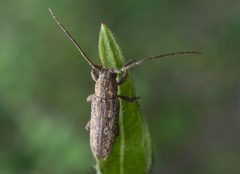
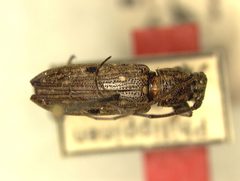
Sybra alternans is a longhorn beetle (Cerambycidae) native to Southeast Asia and the western Pacific. It has been introduced to Hawaii (1917) and Florida, where it established outside its native range. The feeds on a diverse array of plants including agricultural crops and ornamental species, suggesting habits. Its wide distribution across island and mainland indicates significant capability.
Pronunciation
How to pronounce Sybra alternans: //ˈsɪbrə ˈɔːltɜrnæns//
These audio files are automatically generated. While they are not always 100% accurate, they are a good starting point.
Images
Distribution
Native to Myanmar, Thailand, Laos, Cambodia, Vietnam, Malaysia, Taiwan, Indonesia, the Philippines, Mariana Islands, Caroline Islands, and Marshall Islands. Introduced to Hawaii in 1917 and to Florida in the United States.
Diet
Has been observed feeding on: Ananas comosus (pineapple), Canavalia ensiformis (jack bean), Musa × paradisiaca (banana), Ocimum basilicum (basil), Phaseolus vulgaris (common bean), Pittosporum tobira (Japanese pittosporum), Vachellia farnesiana (sweet acacia), and Xanthium strumarium (cocklebur).
Host Associations
- Ananas comosus - food plant
- Canavalia ensiformis - food plant
- Musa × paradisiaca - food plant
- Ocimum basilicum - food plant
- Phaseolus vulgaris - food plant
- Pittosporum tobira - food plant
- Vachellia farnesiana - food plant
- Xanthium strumarium - food plant
Human Relevance
Introduced to Hawaii and Florida, potentially impacting agriculture through feeding on crop plants including pineapple, banana, and common bean. The 1917 Hawaii introduction date suggests early 20th-century anthropogenic transport, possibly via maritime trade.
More Details
Taxonomic Note
GBIF lists Mycerinopsis alternans Gressitt, 1956 as a synonym, though Catalogue of Life accepts Sybra alternans (Wiedemann, 1823) as the valid name. The Sybra is currently placed in tribe Apomecynini, Lamiinae.